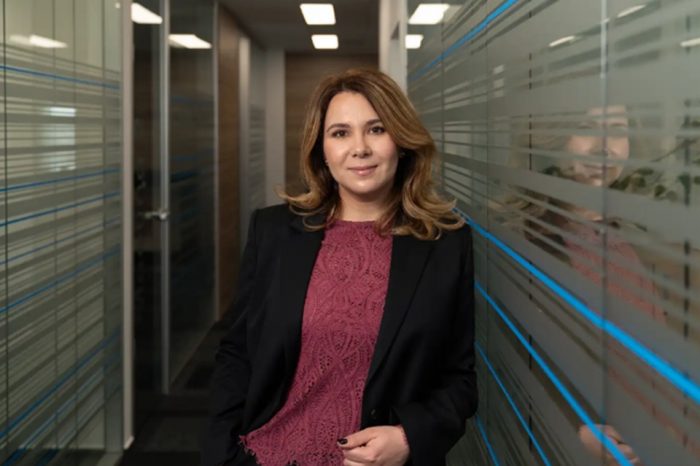
László Pálházi, Principal, Horváth Romania: From cost cutting to financial discipline: why IT keeps getting out of control
 Magda Purice
Posted On March 25, 2026
Magda Purice
Posted On March 25, 2026

In almost every company, there is a moment that repeats itself with frustrating precision: IT costs are rising, pressure is on, and the reaction is swift and decisive: “we need to cut the budget.”
A cost optimization program is then implemented, as ambitious as it is painful: contracts are renegotiated, projects are cut, investments are postponed.
On paper, the results look good. At least for a while. Then, two or three years later, it’s the same story: costs start to rise again.
For many CIOs (Chief Information Officers), this cycle has become almost inevitable. The question is no longer whether they will have to cut costs again, but when.
Most organizations know how to cut costs. They have already done it, sometimes with remarkable success.
The real problem is another: they don’t know how to maintain these results over time. It’s the difference between giving a general cleaning to an apartment and managing to keep it tidy every day.
In IT, this is even more visible. Why? Because it is an area where costs are not static, but are constantly influenced by the emergence of new technologies, increasing business requirements and the gradual accumulation of system complexity. Without a continuous control mechanism, costs inevitably return to high levels.
A common scenario: a company decides to reduce its IT budget by postponing projects or reducing development teams. In the short term, the savings are real. However, in the medium term, systems become harder to maintain, delivery times increase, and teams end up patching solutions instead of building new ones.
The result? Higher operational costs and a lower capacity for innovation. In other words, you haven’t eliminated costs. You’ve moved them – and often, you’ve amplified them.
Four questions that too few companies ask
Organizations that manage to break out of this cycle don’t necessarily do spectacular things. But they systematically ask themselves four essential questions:
- Where are the costs actually located?
- How much should they cost?
- How do we specifically reduce them?
- How do we ensure that they don’t increase again?
It sounds simple. In practice, the answers to the above questions will show exactly what a company is missing to break free from this vicious circle.
1. Without transparency, costs are just assumptions
The first step is the most underestimated: understanding the real costs. In many organizations, IT costs are fragmented: allocated differently across departments, difficult to correlate with the services delivered, and hard to compare. In this context, benchmarking becomes approximate, cost targets are arbitrary, and accountability is diffuse.
That is why more and more companies are adopting standardized Technology Business Management (TBM) models and dedicated tools, which allow real visibility into costs. It is a significant effort, but without it, any optimization remains, in essence, an assumption.
2. Not all costs need to be reduced
Transparency answers the question “Where are the costs?” Not “How much is too much and what is actually worth reducing?” This is where benchmarking comes in. Without external benchmarks, many organizations oscillate between two extremes: either cutting too much, which affects quality, or not cutting enough, and thus remaining inefficient.
Mature companies compare their costs with those of the market and set realistic targets. In some cases, they go even further, using concepts such as target costing or cost engineering for IT services.
3. Cost reduction is not a theoretical exercise
Identifying problems is one thing. Solving them is another. In practice, optimization measures fall into three main areas:
Suppliers – renegotiating contracts, optimizing consumption, changing partners;
Operations – simplifying services, adjusting service levels, eliminating projects with no clear value;
Human resources – automation, shared services models, reorganization.
But the real difference is not the list of measures, but the execution. High-performing organizations create a “closed loop” of costs: from transparency to targets, from measures to savings and then to recalibrating budgets. Without this mechanism, savings remain occasional. With it, they become structural.
4. Cost discipline is built daily, not annually
Perhaps the most important lesson: cost management is not a project. It is a routine.
Two elements make the difference: on the one hand, active control of IT costs – Technology decisions are constantly evaluated from a financial perspective, not just a technical one; on the other hand, clear accountability – IT managers are not only responsible for service performance, but also for cost efficiency. When these mechanisms are integrated into everyday activity, costs no longer “slip”.
Conclusion: From reaction to control
Most companies know how to cut costs. The hard question is why they have to do it again, every few years. The answer is not a lack of action, but the absence of a real cost management capability.
Organizations that manage to break this cycle build four things:
- Transparency
- Clear efficiency benchmarks
- Concrete measures
- Discipline in execution
Change seems simple in theory. In practice, it is one of the most difficult organizational transformations. But it is also the difference between companies that react to budget pressure and those that truly control their technology investments.
About Horváth
Horváth is one of the leading international, independent management consulting companies, with a solid presence on the Romanian market since 2005. Founded in Stuttgart in 1981 by Prof. Dr. Péter Horváth, a pioneer of Controlling in Germany, the company today has over 1,400 employees worldwide. Horváth has offices in Germany (Berlin, Düsseldorf, Frankfurt, Hamburg, Munich and Stuttgart), Austria, Romania, Switzerland, Hungary, Italy, Denmark, Saudi Arabia, the United Arab Emirates and the United States, while providing consulting services to clients worldwide. Horváth is a member of Cordence Worldwide, the leading global alliance of independent management consulting firms, which brings together almost 70 offices in 24 countries on three continents.
On the local market, Horváth has been providing consulting services at the highest level for 20 years. During this time, the Romanian team has delivered over 600 projects, with a cumulative value of over 115 million euros, for companies in industries such as energy, banking and financial services, courier & logistics, retail & FMCG, pharmaceuticals, the public sector and others.