Horváth: Only 23% of banks effectively leverage data, and digital transformation becomes an urgency for corporate banking
 Magda Purice
Posted On July 30, 2025
Magda Purice
Posted On July 30, 2025

- 77% of banks in the DACH region (Germany, Austria, Switzerland) do not effectively use data in strategic decisions. Artificial intelligence, end-to-end digitalization and contextual pricing will become standard by 2030.
- Traditional banking models are under pressure from new players and the increasing expectations of corporate clients.
Digital transformation is no longer a simple future plan for corporate banking, but an immediate necessity. Banks that do not act quickly lose ground to more agile and technologically better prepared competitors. This is the main conclusion of the study “Transformation in Corporate Banking 2030”, conducted by Horváth, an international management consulting company, present on the Romanian market since 2005.
Conducted on a sample of over 60 banking experts from the DACH region (Germany, Austria, Switzerland), the Horváth study revealed aspects of interest for the entire European banking system: strategic adaptability, complete digitalization of processes and intelligent data exploitation have become essential conditions for survival and competitiveness in the coming years.
Although banks hold considerable volumes of data about their customers, only 23% of them consider themselves at an advanced level in the efficient use of data for strategic decisions. The majority (77%) are not yet capitalizing on the huge potential of the information they hold. The main obstacles include outdated IT systems, a shortage of specialists and a lack of a data-driven organizational culture. These limitations reduce the ability of banks to personalize services, anticipate customer needs and innovate products.
By 2030, artificial intelligence (AI) will become a standard on a large scale in the banking industry. AI is already a priority in digitalization budgets – around 30% of investments are directed towards AI-based solutions. Concrete applications include automated risk assessment (such as solutions implemented by DBS Singapore or BBVA Spain), real-time offer personalization, fraud detection and optimization of credit approval flows.
Fully digitalized end-to-end (E2E) processes are no longer a competitive advantage, but an essential condition for a bank to remain relevant in the market. Institutions that still operate with “digital gaps” – where manual or isolated steps fragment the experience – are rapidly losing customers to FinTechs that offer fully online onboarding, lending and reporting. Corporate clients want the same simplicity and speed as in retail banking.
The traditional “cost-plus” pricing model no longer reflects the real needs of customers. Banks must adopt dynamic pricing models, driven by data and automated by AI, to respond to rapid changes in the industry. In parallel, collaborations in open banking ecosystems – including with FinTechs or external platforms – are becoming essential for expanding services and loyalty of corporate clients.
Transformation should not be viewed only from a technological perspective. Banks are increasingly pressured to integrate ESG criteria into risk assessments and provide advice on the sustainable transition of clients. At the same time, the volatile geopolitical context and increasingly frequent cyber attacks require a dynamic approach to risk management. The lack of talent in critical areas such as AI, ESG and Data Analytics remains a major obstacle for the entire European banking industry.
With a solid experience in digital transformation projects for financial institutions in Europe, Horváth supports banks in modernizing IT architectures, optimizing corporate portfolios, digitizing E2E processes and integrating emerging technologies. The main objective is to build a scalable, sustainable and future-proof business model, where data, technology and agility define the leaders in corporate banking.
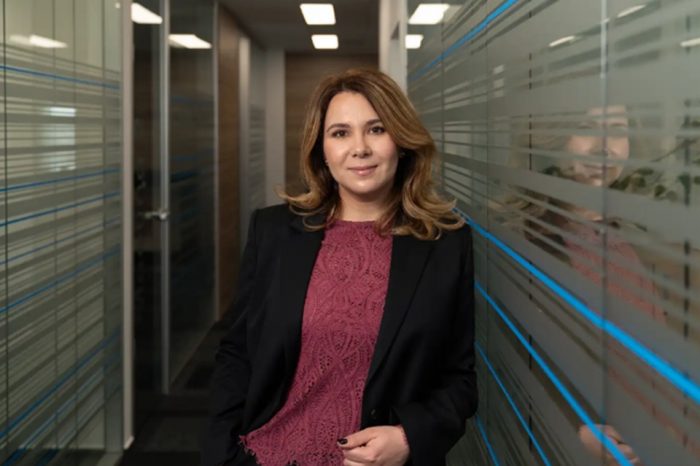
“The banks that will win the competition by 2030 will not necessarily be those with the largest assets, but those that use data intelligently, completely digitize their business processes and accurately understand the needs of corporate clients. Transformation is no longer a simple option, but a condition for survival and growth in an industry undergoing profound transformation”, says Maria Boldor, Partner and Managing Director, Horváth Romania.