🎙️Arkadiusz Sikora, Chief Operating Officer, Exorigo-Upos: AI is only as good as the foundation underneath it
 Magda Purice
Posted On April 29, 2026
Magda Purice
Posted On April 29, 2026
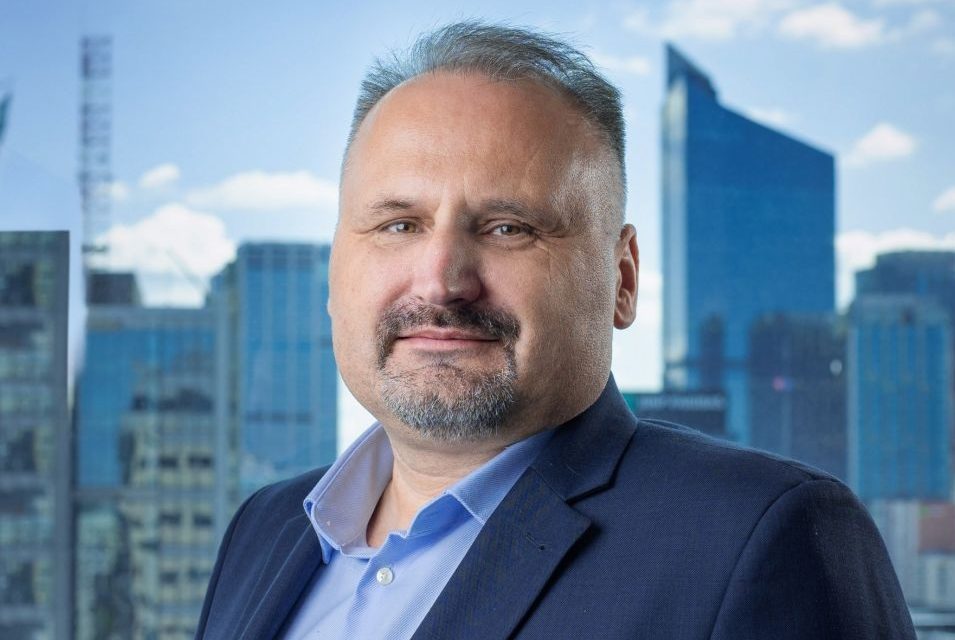
Outsourcing Today, the business services industry’s integrated networking and news platform, continues its interview series with leaders shaping the future of business services and related sectors. We explore key perspectives on the year ahead, strategic priorities, and growth opportunities.
Read below the key standpoints and perspectives of Arkadiusz Sikora, Chief Operating Officer (COO), Digital Transformation Solutions and Cloud & Infrastructure in Exorigo-Upos
🎙️AI-based technologies changing company’s competitive edge
AI is shifting our edge from scale to speed. As Poland’s leading retail IT outsourcing partner — and now growing in Romania — we’ve always competed on operational depth: nationwide POS service, systems management, in-store presence. What AI adds is a new dimension of responsiveness. We’re embedding AI into our software development practice and into our ITSM workflows, so the same teams that keep retail running can now anticipate issues, resolve them faster, and deliver new functionality at a pace legacy outsourcing models simply can’t match. The competitive edge in 2026 isn’t “we have AI” — it’s how deeply you weave it into the work you were already trusted to do.
That AI replaces expertise. In our experience, the opposite is true — AI amplifies the people who understand the domain best. A senior architect or a retail systems specialist working with AI produces dramatically better results than a generalist with the same tools. The misconception is treating AI as a shortcut around know-how. It’s actually a multiplier on top of it. Companies that lean into their experts win; companies that try to skip the expertise stage learn an expensive lesson. The time to market for those who bypass expertise can be fast but deeper consequences even faster.
🎙️AI-led business decisions
We’re deliberate here: AI assists, people decide. Today AI supports our engineering teams in software development — including work on legacy systems where we’re using AI to accelerate modernization — and we’re extending it into our ITSM operations to streamline incident handling and service management. Strategic decisions, customer commitments, and accountability remain firmly with our people. We see AI as a powerful co-pilot in execution, not a substitute for judgment.
🎙️AI changing customers’ expectations
Expectations have compressed. Retail clients used to plan IT change in quarters; now they expect weeks. They want faster onboarding of new store concepts, near-real-time visibility into their estate, and proactive service rather than reactive ticket-closing. AI has made all of that reasonable to ask for — and our job is to make it reasonable to deliver, consistently, across thousands of locations in Poland and Romania.
🎙️Staying differentiated in the market
Three things keep us differentiated. First, end-to-end coverage — from POS in a store in a small town to enterprise systems integration — which very few competitors in our region can match. Second, deep retail domain knowledge built over years of running mission-critical operations for the largest chains. Third, our investment in AI-assisted engineering and AI-augmented service management, which lets us bring that depth to clients faster than traditional outsourcing models allow. The combination — physical reach, domain expertise, and modern tooling — is hard to replicate.
🎙️Balancing rapid innovation with responsible and ethical AI use
We innovate inside guardrails. Before adopting AI tooling we evaluate it carefully — security posture, data handling, where information actually flows. We treat AI agents with the same rigor we’d apply to any system touching client data, because in retail outsourcing, trust is the product. We move quickly on capability and slowly on access; that combination has served us well.
🎙️Technologies trending now
The quiet modernization of operational backbones — the systems that actually run the business. Observability, secure connectivity, modern data platforms, resilient infrastructure. AI is only as good as the foundation underneath it, and many organizations are about to discover that their legacy estates can’t support the AI ambitions their boards have set. Investing in that foundation now is unglamorous but decisive.