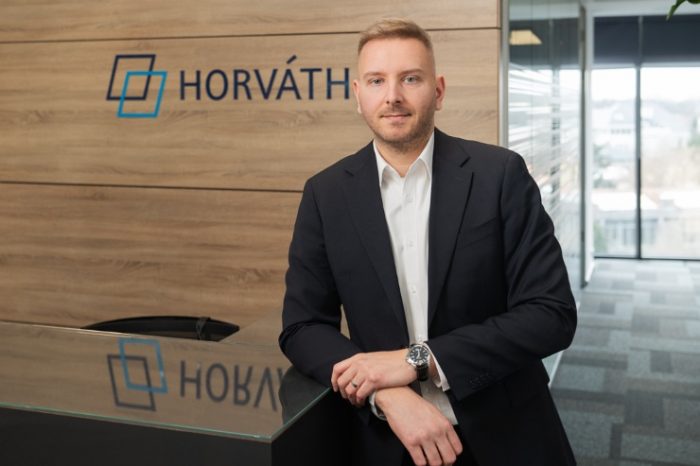
Horváth: Cost Reduction Becomes the Primary Source of Funding for Corporate Transformation
 Magda Purice
Posted On July 28, 2026
Magda Purice
Posted On July 28, 2026

- Cost optimization ranks as the second-highest strategic priority for CEOs, immediately after artificial intelligence and digital transformation.
- Companies are targeting cost reductions equivalent to 3% of revenue in manufacturing and 5% of revenue in services, setting more ambitious goals than in 2025.
- Despite a challenging economic environment, operating profit (EBIT) margins are expected to remain stable or even post slight growth in 2026.
Cost reduction is no longer merely an exercise in financial discipline or a response to economic uncertainty. For a growing number of companies, operational efficiency is becoming the primary source of funding for investments in transformation, digitalization, and artificial intelligence, according to the “CxO Priorities 2026” study conducted by Horváth, the international management consulting firm that has been active in the Romanian market for more than 20 years.
Based on interviews with more than 1,000 C-level executives (CxOs), the study reveals that improving cost structures and profitability has become the second most important strategic priority for business leaders worldwide, following investments in artificial intelligence and digital transformation.
Against this backdrop, efficiency targets are becoming increasingly ambitious. In 2026, manufacturing companies expect to achieve cost reductions equivalent to 3% of revenue, while companies in the services sector are targeting savings of 5% of revenue. Compared with the previous edition of the study, these targets have increased by 0.5 percentage points in manufacturing and 2.7 percentage points in services, highlighting that efficiency is increasingly viewed as an investment in competitiveness rather than simply a cost-control measure.
For manufacturing companies, the largest cost reductions are expected in selling, general and administrative (SG&A) expenses (28%), followed by indirect production costs (14%). In the services sector, the biggest savings are expected to come from personnel expenses (34%), followed by selling, general and administrative (SG&A) expenses.
The Horváth study shows that cost reduction programs are no longer focused solely on cutting operating expenses. Instead, the emphasis is shifting toward simplifying organizational structures, optimizing business processes, and improving productivity, allowing the resulting savings to be reinvested in new technologies and corporate transformation initiatives.
“In recent years, cost reduction was primarily viewed as a response to economic uncertainty. Today, we are seeing a paradigm shift: companies are using efficiency improvements to generate resources for investments in artificial intelligence, digitalization, and the development of new competitive advantages. Companies that successfully combine financial discipline with transformation investments will be best positioned for the next growth cycle,” said Maria Boldor, Partner and Managing Director, Horváth Romania.
Regarding the main risks anticipated by executives over the coming period, manufacturing companies rank supply chain disruptions (56%) as the top concern, followed by rising energy prices (51%) and changes in trade tariffs (39%).
For service companies, financial risks dominate, with inflation (59%) and rising interest rates (45%) topping the list. However, executives in this sector are also concerned about higher energy prices (37%), which rank among the top three anticipated risks.
Despite ongoing economic pressures, profitability expectations remain cautious but stable. The study forecasts that EBIT margins will remain stable in 2026. In the services sector, operating profitability is expected to increase marginally from 13.0% to 13.03%, while in manufacturing it is projected to rise from 7.6% to 8.4%. This trend suggests that efficiency measures are beginning to deliver results and are creating the conditions for further investment.
The 2026 edition of the “CxO Priorities” study, titled “Rethink Competitiveness in the New Economic Reality,” is based on interviews with 1,000 executives from companies across four continents, representing organizations with global reach. More than 43% of participating companies generate annual revenues exceeding €1 billion.
About Horváth
Horváth is one of the world’s leading independent management consulting firms and has maintained a strong presence in the Romanian market since 2005. Founded in Stuttgart in 1981 by Prof. Dr. Péter Horváth, a pioneer of controlling in Germany, the firm now employs more than 1,400 professionals worldwide
Horváth operates offices in Germany (Berlin, Düsseldorf, Frankfurt, Hamburg, Munich, and Stuttgart), Austria, Romania, Switzerland, Hungary, Denmark, Saudi Arabia, the United Arab Emirates, and the United States, while serving clients around the globe. Horváth is also a member of Cordence Worldwide, the leading global alliance of independent management consulting firms, bringing together nearly 70 offices across 24 countries on three continents.
In Romania, Horváth has been delivering top-tier consulting services for 20 years. During this period, the Romanian team has completed more than 600 projects with a combined value exceeding €115 million, serving clients across industries including energy, banking and financial services, courier and logistics, retail and FMCG, pharmaceuticals, the public sector, and many others.

Trending Now


You may also like