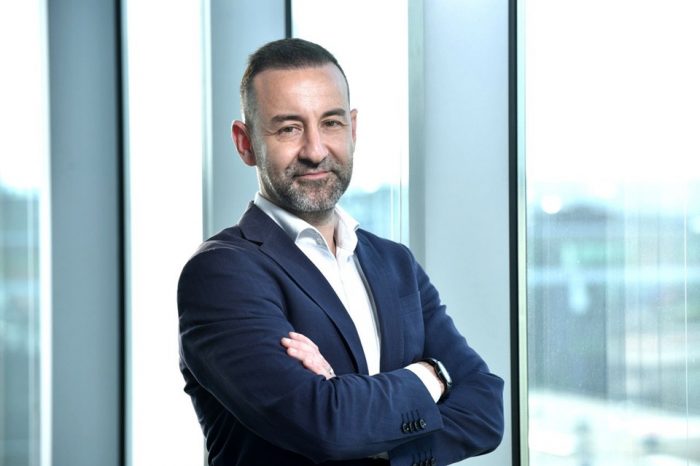
Ivana Bartoletti, Wipro’s Global Privacy and AI Governance Officer: The future of AI will not be determined by technical capabilities alone, but by the collective choices we make — as companies, as governments, and as nations
 Magda Purice
Posted On February 18, 2026
Magda Purice
Posted On February 18, 2026

🔶 Artificial intelligence is not merely a technological development; it is a question of power, of geopolitics, and of societal transformation. It is reshaping how we work, how we relate to one another, and how we organize our economies. For that very reason, it demands a deliberate and principled ethical approach. The future of AI will not be determined by technical capabilities alone, but by the collective choices we make — as companies, as governments, and as nations. stated Ivana Bartoletti, Wipro’s Global Privacy and AI Governance Officerwho is currently attending the India AI Impact Summit in New Delhi.
The statement has been uttered within the recently held event of Wipro’s India Romania AI Pre-Summit 2026, an affiliated event leading into the India AI Impact Summit in New Delhi and organized together with Embassy of India in Romania.
Other insights from Ivana Bartoletti, Wipro’s Global Privacy and AI Governance Officer during the event:
🔶 At the level of states and international organizations, the central challenge lies not only in how we deploy these technologies, but in how we prepare the world for them. This includes equipping the workforce for profound structural change, enabling individuals to collaborate effectively with machines, and ensuring that human and artificial intelligence — fundamentally different in nature — complement rather than undermine one another. These questions will be at the forefront of the upcoming summit, notably the first of its kind to be held in the Global South. This is particularly significant given that many of the AI systems shaping our daily lives are developed in the United States — a reality with clear geopolitical implications.
🔶 While AI offers vast capabilities, extraordinary opportunities, and unprecedented speed of innovation, we must confront its darker dimensions with equal seriousness. When AI systems are entrusted with decision-making, they can inadvertently entrench and amplify existing social inequalities, solidifying biases rather than alleviating them.
🔶 We are moving from an economy of attention — driven by social media — toward an economy of emotions. Artificial intelligence is accelerating this shift, not always toward positive ends. This is precisely where responsible AI must take center stage, and where regulatory frameworks play a crucial role. An example is the European Union’s Digital Omnibus initiative, introduced in November last year. The proposal seeks to streamline and technically refine a broad body of digital legislation, reducing compliance burdens for businesses, public administrations, and citizens while maintaining regulatory objectives. It represents an effort to optimize the digital rulebook so that compliance becomes more efficient, cost-effective, and ultimately a competitive advantage for responsible organizations.
🔶 Within corporations, legal safeguards and protections can and should be embedded directly into innovation processes. By integrating regulatory foresight into technological development, companies can serve as trusted partners to clients worldwide — fostering innovation while upholding robust standards of security, safety, and privacy. In this way, responsible governance and technological progress are not opposing forces, but mutually reinforcing pillars of sustainable digital transformation.
About the event
Wipro, together with the Embassy of India in Romania, recently held the India Romania AI Pre-Summit 2026, an affiliated event leading into the India AI Impact Summit in New Delhi. As AI reshapes industries and national priorities, this gathering brings together diplomatic leaders, business executives, and AI experts to discuss responsible, scalable, and trusted AI adoption.
Hosted at Wipro’s Bucharest office, the Pre-Summit provided a focused platform to explore policy frameworks, cross border collaboration, and emerging opportunities for India Romania cooperation, supported by Wipro’s intelligence led approach to innovation.
The event brought forward fresh perspectives on AI driven national and enterprise transformation, powered by Wipro Intelligence™, the company’s AI first architecture that helps organizations scale with confidence. Through high‑impact conversations and expert insights, participants engaged in the future of ethical AI ecosystems, innovation pathways, and talent development.
The gathering welcomed senior representatives from both diplomatic and corporate circles, including H.E. Dr. Manoj Kumar Mohapatra, Ambassador of India to Romania, and Ciprian Dan, Romania Country Head of Wipro.
A dedicated session on the impact of AI on academic learning and corporate operations and services was chaired by Raluca Andreea Popa, PhD, PCC, Internationally Certified Leadership Coach, together with Laura Băiașu, Client Delivery Excellence Head Europe BPS, Wipro
The conference also featured a special videocall session with Ivana Bartoletti, Wipro’s Global Privacy and AI Governance Officer, who—ahead of her participation in the India AI Impact Summit—shared comprehensive insights into AI’s societal impact, spanning social, corporate, and geopolitically sensitive dimensions.