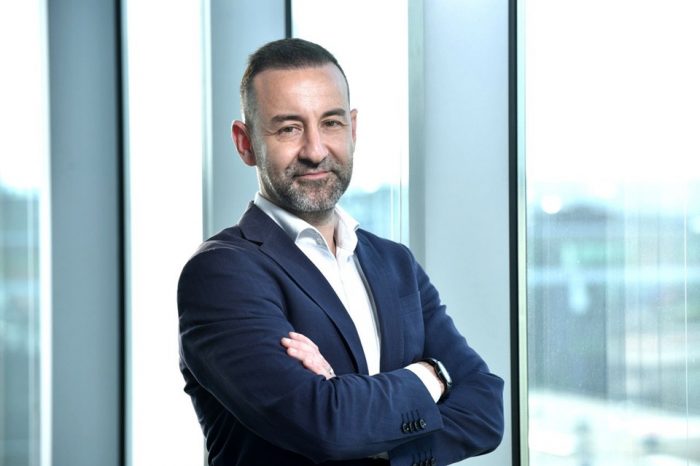
🎙️Marius Drenea, Co-Founder Naratix and partner at WebitFactory: The convergence of AI with integration platforms is key
 Magda Purice
Posted On April 20, 2026
Magda Purice
Posted On April 20, 2026

Outsourcing Today, the business services industry’s integrated networking and news platform, continues its interview series with leaders shaping the future of business services and related sectors. We explore key perspectives on the year ahead, strategic priorities, and growth opportunities.
Read below the key standpoints and perspectives of Marius Drenea, Co-Founder Naratix and partner at WebitFactory:
Move Fast. Scale Smart.
AI is no longer a differentiator; it’s the baseline. What creates a real edge is how deeply and strategically you integrate it into your product and operations. AI is embedded in everything we do, from how we build and iterate to how we engage with clients. The companies that will lead are not those that simply adopt AI, but the ones that rethink their value chain around it.
🎙️What’s the biggest misconception business leaders still have about AI?
That AI is a magic button. Many leaders expect it to solve all their problems simultaneously with minimal effort. The reality is different. AI works best when applied to clearly defined problems, with proper data, realistic expectations, and a structured approach. The other misconception is that AI replaces people. It doesn’t. It amplifies what good teams can do.
🎙️Which business decisions in your company are AI-led?
We use AI across our operational layer: content, data analysis, market research, and workflow automation. A large portion of repetitive processes is handled by AI, freeing the team to focus on strategy and high-impact work. But strategic decisions like product direction, partnerships, and hiring remain human-led, informed by AI-generated insights. The goal is augmentation, not replacement.
🎙️How has AI changed what customers expect from your products or services?
Customers now expect speed, personalization, and precision. The conversation has shifted from “show me what your product does” to “show me what it does for me.” AI raised the bar, and people expect products that learn, adapt, and deliver value fast. This is a healthy shift because it forces everyone to focus on real impact rather than theoretical capabilities.
🎙️How do you stay differentiated in your market, what tools and competitive advantages do you leverage in 2026?
Three things. Depth of understanding, we invest time in the real problems before writing code. Speed of execution, we test ideas fast and iterate on real feedback. And a culture of continuous learning, where every team member works with AI, so our innovation capacity is distributed, not locked in one department. In a market where everyone claims to “do AI,” the advantage belongs to those who deliver measurable results consistently.
🎙️How do you balance rapid innovation with responsible and ethical AI use?
By keeping discipline at the core. Every solution follows a structured process: clear problem definition, testing with real users, and continuous monitoring after deployment. Responsible AI is not about slowing down; it’s about building with accountability. You define clear KPIs, you create feedback loops, and you make sure every automation has a purpose. Speed with direction always outperforms speed without control.
🎙️What technology trend beyond AI should businesses be paying attention to now?
Data readiness. Everyone talks about AI, but few talk about the foundation it needs: clean, structured, accessible data. Most companies that struggle with AI don’t have a technology problem; they have a data problem. Beyond that, the convergence of AI with integration platforms is key. The real transformation happens when AI is a connected layer across your entire business ecosystem, not an isolated tool.