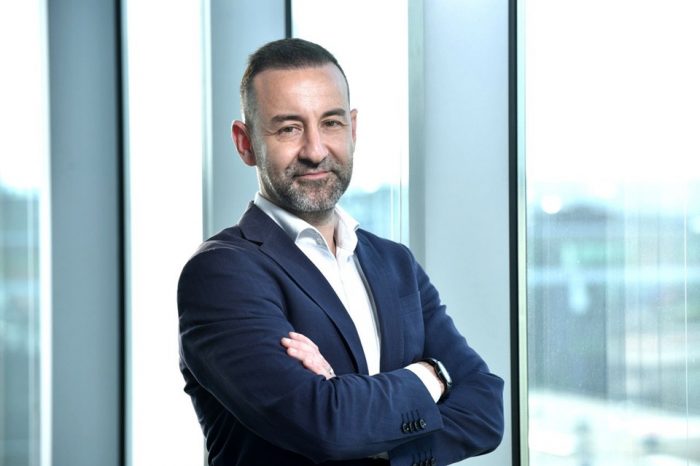
🎙️Ovidiu Pinghioiu, Country Director Cegeka Romania: AI doesn’t behave like traditional software. It introduces non deterministic ways of working
 Magda Purice
Posted On March 2, 2026
Magda Purice
Posted On March 2, 2026

Outsourcing Today, the business services industry’s integrated networking and news platform, continues its interview series with leaders shaping the future of business services and related sectors. We explore key perspectives on the year ahead, strategic priorities, and growth opportunities.
Read below the key standpoints and perspectives of Ovidiu Pinghioiu, Country Director Cegeka Romania.
“Culture eats strategy for breakfast” by Peter Drucker
In 2026, everyone’s obsessed with AI strategy and technological advantage. But I keep coming back to Drucker because he’s right, culture beats everything. You can have the best technology stack in the world, but if you don’t have people who are continuously learning, if you’re not building genuine partnerships, if your culture is transactional rather than collaborative, you’ll lose to competitors who get that right.
That quote reminds me that our competitive advantage isn’t just what we build, it’s how we build it and who we build it with. Culture is the foundation everything else stands on.
How is the AI-based technologies changing your company’s competitive edge in 2026?
AI has really changed the way we compete. With our Cegeka Software Factory, we’ve moved toward an AI native way of working, where our people no longer have to do every task themselves. Instead, they guide and orchestrate AI agents that support the full software lifecycle, from plan and code to monitor and operate. It lets our teams work faster and with more consistency, because the repetitive work and the constant security and compliance checks are handled.
What sets us apart isn’t just that we use AI. It’s that we’ve standardized and industrialized it across all our teams. Every sprint is connected to clear business outcomes and supported by automated value metrics and quality gates, so customers can actually see the impact their investment is creating. By combining human judgment with AI-driven execution, we deliver faster, reduce waste, and keep value at the center of everything we build.
What’s the biggest misconception business leaders still have about AI?
One of the biggest misconceptions I still see among business leaders is the belief that AI will magically solve their problems. Yes, AI can create enormous value, but only if the basics are in place. And for many organizations, they simply aren’t.
A lot of companies are investing heavily in AI while their data is scattered across systems, countries, and formats and that with little governance or structure behind it. Without clean, well-organized data and clear rules around security, compliance, and quality, AI doesn’t accelerate value; it accelerates risk. It’s why so many AI initiatives stall or fail: the underlying governance, ethical checks, and risk controls are missing.
There’s another misconception that often goes unnoticed: AI doesn’t behave like traditional software. It introduces non deterministic ways of working. That means your old processes, the step by step, checkbox-style workflows, simply don’t fit anymore. AI requires new roles, new guardrails, and sometimes an entire cultural shift in how teams collaborate and make decisions. Without that organizational change, AI creates more noise than value.
So before companies can truly benefit from AI, they need to get their foundations right: governance, data quality, structure, security, and the willingness to rethink how work gets done. It’s not the glamorous part of AI, but it’s the part that determines whether AI becomes a value multiplier, or a very expensive experiment.
Which business decisions in your company are AI-led?
None and that’s intentional.
Don’t get me wrong, we use AI extensively across our operations. But we fundamentally don’t believe in AI-led decision-making, especially when it comes to strategic business choices.
AI is a powerful tool for augmentation, not replacement. It can surface insights, identify patterns we might miss, accelerate analysis, and give us better data to work with. But the actual decisions? Those need human judgment, context, experience, and accountability.
Business decisions involve long-term implications and stakeholder impact that AI simply can’t fully understand. We use AI to make more data-driven decisions, but the decision itself always sits with a person who understands the broader context and can be accountable for the outcome.
How has AI changed what customers expect from your products or services?
Customers today expect things to move faster, but without cutting corners on security, compliance, or quality. They’re no longer satisfied with just “working software.” They want to see real, measurable business value from every release, and they expect that value to be visible and traceable.
And more than ever, they expect us to take the lead. Instead of waiting for them to ask where AI could make a difference, they want us to proactively spot opportunities and bring forward AI‑infused features and efficiencies that improve their applications and their business.
How do you stay differentiated in your market, what tools and competitive advantages do you leverage in 2026?
We stay differentiated because of how we’ve evolved the way we deliver software. First, the Cegeka Software Factory gives us a level of industrialization and automation that most companies simply don’t have. AI isn’t something we “add on”. It’s built into every stage of the software development lifecycle. Our teams work in an AI native model, where people orchestrate AI agents rather than manually carrying every task themselves. That’s what allows us to deliver with speed, consistency, and built in security and compliance at scale.
Second, our people remain a huge part of our advantage. Even with all the automation we’ve put in place, great outcomes still depend on people who can think critically, solve problems, and guide AI in the right direction. We invest heavily in strengthening those skills across all roles because an AI native workforce only works when humans know how to steer it.
And finally, differentiation for us has always come from how we work with customers. We don’t take a transactional approach. We embed ourselves into their challenges, understand the outcomes they’re trying to achieve, and work shoulder to shoulder as one team. That’s also why our value first delivery model resonates so strongly. Customers see exactly how every sprint and every feature contributes to their business goals through automated metrics, dashboards, and transparency. It builds trust, and trust is something competitors can’t copy by simply being cheaper or faster.
How do you balance rapid innovation with responsible and ethical AI use?
We build responsibility into the way we use AI from the very start. That means having the right governance in place, using clear quality gates, and relying on automated checks for security, compliance, and software integrity. We support this with SBOMs, continuous monitoring, and role based training so our teams know how to work with AI safely and effectively. In practice, it means we can innovate quickly, but always within a framework that’s controlled, transparent, and easy to audit.
What technology trend beyond AI should businesses be paying attention to now?
Two of them: cybersecurity and data infrastructure.
Everyone’s talking about cybersecurity because of the geopolitical context, but the problem is too many companies still treat it as a ‘nice to have’ rather than a business-critical necessity. That mindset is about to change, we’re seeing a shift in customer behaviour.
The second area is data infrastructure and this ties directly back to AI. Everyone’s rushing to implement AI solutions, but AI without proper data infrastructure is like a car without wheels. It looks impressive, but it’s not going anywhere.
If you don’t have clean, organized, accessible data, your AI investments will fail. So while AI gets all the headlines, the work of building robust data foundations is actually what separates companies that successfully leverage technology from those that just waste money on it.