Corina Vasile, Director Executiv, ANIS: What the epic of the electronic signature tells us about the digitalization of Romania
 Magda Purice
Posted On February 4, 2026
Magda Purice
Posted On February 4, 2026

At first it was a draft law that was talked about a lot before it took effect. Announced, initiated three times in three different forms, negotiated and finally adopted, Law no. 214/2024 on the use of electronic signatures remained, for a long time, more of a promise than a functional instrument.
Practically for a year and a half we had a law in force, but inoperable, because it had no implementing rules. The recent publication of the implementing rules of the law closes this chapter of uncertainty and marks the moment when the electronic signature really starts to work, with clear rules for the private sector, citizens and public administration. It is worth noting that the Ministry of Economy, Digitalization, Entrepreneurship and Tourism has now closed this circle, by publishing the rules, providing clarity and predictability to an ecosystem that has waited too long for this outcome.
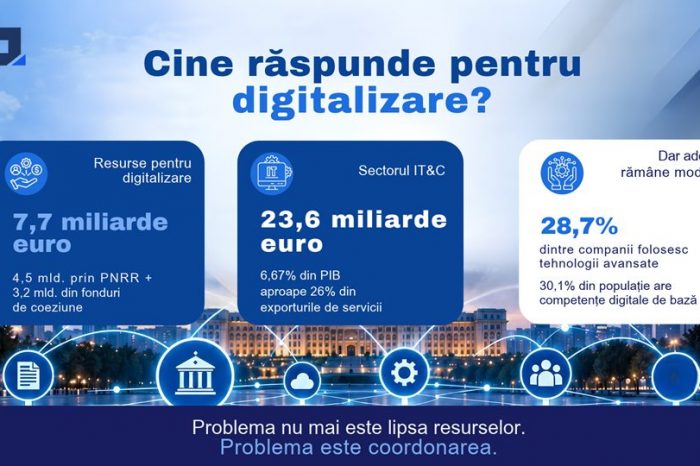
In Romania, digitalization is not held back by the lack of technical solutions, but by delays in decision-making
After more than ten years of debate, Romania adopted, in 2024, Law no. 214/2024 on the use of electronic signatures, time stamps and the provision of trust services based on them. It was an important but incomplete moment. Since July 2024, the effective application of the law has depended on the publication of the implementing rules – rules that have only appeared now, at the beginning of 2026, after almost a year and a half of more or less well-founded discussions, negotiations and procrastination. During this period, the electronic signature has continued to exist in a climate of legal uncertainty, especially in relations with public authorities.
For the IT industry and the private sector in general, the electronic signature is neither new nor spectacular. It is a tool that has been used for years, a basic component of modern digital processes. That is why the stakes of these regulatory approaches have never been about technology or innovation per se, but about normalization: creating a legal framework that allows these benefits to be extended to the entire economy. And an important step for the digitalization (today in many cases at the stage of – print – sign – upload the document to an online platform) of public services at the interface with the citizen/company and the flow of documents between public institutions.
For ANIS – the Employers’ Association of the Software and Services Industry – this topic is perhaps the oldest of those that have dragged on for an unusually long time. The IT industry has consistently supported, for over a decade, the need for clear and enforceable legislation on electronic signatures. We participated in consultations, formulated proposals, provided technical clarifications and explained, many times, why this topic is essential not only for technology providers, but for the normal functioning of the digital economy.
Digitalization that is really visible
The implementing rules of Law 214/2024 are here to transform an already familiar tool into a truly useful mechanism for key sectors of the economy. In banking, for example, the electronic signature allows accounts to be opened, contracts or documentation related to financial products to be signed without physical presence, in a secure manner and in accordance with legal requirements. In insurance, the digitalization of the bidding, issuance and management of policies becomes much more efficient when documents can be signed electronically, without unnecessary delays and administrative costs. In utilities, telecommunications, healthcare or other digital platforms, the electronic signature makes possible fast, clear and traceable interaction between citizens and public or private providers, eliminating the need for travel and paper documents. For people, this means time saved and easier access to services. For companies, it means more efficient processes and a better experience for their customers.
An essential element in this ecosystem is the Electronic Identity Card (EIC), which includes an advanced electronic signature. This aspect brings added simplicity for citizens, who can use the EIC not only as an identity document, but also as an electronic signature tool in their relations with public and private service providers. The integration of the electronic signature in the EIC creates the premises for a wide and intuitive use, reduces barriers to adoption and increases trust in digital solutions.
In essence, the legal framework on electronic signatures creates the necessary context for the widespread adoption of digital solutions in a uniform manner and provides clarity on the legal effects for each type of electronic signature – simple, advanced and qualified. This framework encourages investments in digitalization in both the private sector and public administration.
Taken as a whole, this comprehensive legal framework represents an important building block in the process of Romania’s digital transformation. The next natural step is the coherent integration of European initiatives, in particular the EU Digital Identity Wallet, which will enable the use of digital identity and electronic signature in an interoperable framework at the European Union level. Given the ambitious European deadlines for implementation – each Member State must have a functional national wallet by the end of 2026 – it is essential that Romania has, in a short period of time, a clear, functional and predictable national legislative framework. At the same time, the effective adoption of this instrument presupposes the existence of an open and competitive market, allowing innovation and the participation of a wide range of suppliers. In this context, it is welcome that the Government seems to finally give a strategic priority to digitalization, creating the necessary premises for real alignment with the European digital agenda.
The technology is here. The economy is running out of patience. The state must keep up.
For ANIS and the IT industry, the message remains consistent: the technology exists, is mature and is already being used. The difference is made by the framework that allows its extension to all industries and citizens. After years of waiting, we have the chance to treat the electronic signature not as a special project, but as a basic element of the digital economy. The completion of the legal framework for the use of the electronic signature is only the beginning of a stage in which digitalization can be made coherent, predictable and with real impact.
Looking to the future, we want such delays to no longer be the rule, for otherwise normal regulations to be adopted and implemented without the need for years of political discussions and negotiations. We need proper digital governance, a clear framework, responsible decisions and a pace that keeps pace with economic and technological reality. Only in this way can digital transformation become the engine that fundamentally changes the way the economy, administration and citizens interact in Romania.