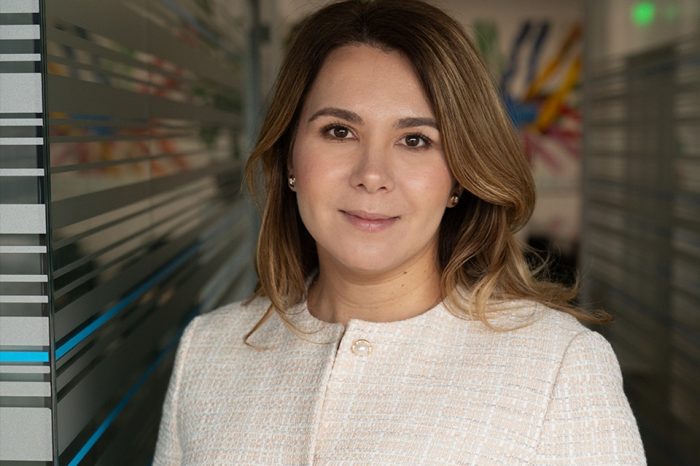
Laura Busu, HR Director for Michelin Corporate Business Services Romania: Our leadership philosophy puts people at the center and is grounded in a culture of openness and autonomy
 Magda Purice
Posted On December 8, 2025
Magda Purice
Posted On December 8, 2025

At Michelin Corporate Business Center, we value psychological safety, self-awareness and collective intelligence. These are essential to a company culture that fosters personal and professional growth, operational excellence and a feeling of belonging.
Which values are most emphasized and promoted across teams at Michelin CBS Romania?
We live in a context where change happens at a greater speed than ever, where uncertainty and unpredictability are constant, so high-performing teams are those who foster diversity of opinion and do not fear innovating, fail sometimes, learn from their failure and try again.
We actively support all our employees to develop self-awareness through Process Communication Model, 360 and 180 feedback. A strong culture of feedback drives constructive change and development for individuals, teams and the company.
We value collective intelligence; where there are more minds working together, we can achieve better results, because each person brings their own personal and technical experience, and through collaboration we can gain a more accurate overall picture and develop more practical, effective solutions.
Which are the key Learning & Development initiatives currently in place at Michelin CBS Romania?
As part of talent strategy and development, we focus on preparing our colleagues for future jobs, whether it’s a career change moving to broader responsibilities, a people manager career or developing a career as a technical expert. We also look ahead to the jobs of the future by anticipating the impact of artificial intelligence, Generative AI and Agentic AI on existing roles.
In 2025, we focused on strengthening digitalization and AI knowledge for all Lean methodology and expanding technical skills for each business unit core activity. Our objective was to develop digital capabilities, especially in AI and data visualization, contributing to the acceleration of the center’s digital transformation.
We organized events and practical training sessions for all employees and in-depth programs like Citizen Developer Bootcamps and Citizen Development Academy for a significant part of our organization. At the same time, we developed internal training programs aiming to develop very specific competencies in Finance, Logistics, Procurement and HR.
How does the organization measure the effectiveness and impact of its L&D programs?
We assess impact through performance indicators such as productivity improvements, error reduction, process optimization and the percentage of new roles filled internally. Michelin Corporate Business Center expanded its activity by 25% in the last 2 years and 80% of these new roles were filled in by existing colleagues – an important marker for internal mobility and development.
From a more technical HR perspective, we track metrics like training hours per employee, drop-off rates and training attendance. We currently average 30 hours of in-class training per employee, excluding online training. Yet the most important aspect is the result of this time investment, the effect of the lifelong learning mindset.
We look at the set of competencies needed by each role and how each employee’s competency level is situated versus the ideal one. HR and People Managers collaborate to constantly define the competencies needed for the existing jobs and for the future roles, and we conduct our training needs analysis by looking at the gap and building individually tailored training solutions. After 6-12 months we reevaluate the competencies and the progress and refine development actions.
How does leadership at Michelin CBS Romania model or support a culture of continuous learning?
Our leadership philosophy puts people at the center and is grounded in a culture of openness and autonomy. Employees are encouraged to share their perspectives and engage in internal communities and projects that strengthen both their capabilities and their sense of belonging.
We invest continuously in our integration and development practices. We offer comprehensive onboarding experience, leadership development initiatives, and ways of working that emphasize psychological safety and cross-functional collaboration.
Onboarding plays a particularly important role. Michelin has a long-standing, deeply rooted culture, but newcomers often concentrate first on learning their roles, which means it can take time to fully absorb the culture. When many employees join within a short time frame, it’s natural for a temporary blend of different cultural influences to appear. To support cultural integration, we offer a five-day cultural onboarding program delivered in a modular format (three days at the start, one day after the first week, and one day after three months, when employees already have concrete examples to work with). This is followed by a series of courses recommended for the first year, such as Customer Centricity and Business Partnering, all delivered in person at the office.
Together, these practices ensure that our culture stays dynamic and meaningful, no matter how quickly the organization evolves.