Orange Romania: In 2025, shifts in employee expectations and behaviors are obviously linked to broader societal trends, technological advancements and evolving workplace norms
 Magda Purice
Posted On August 20, 2025
Magda Purice
Posted On August 20, 2025

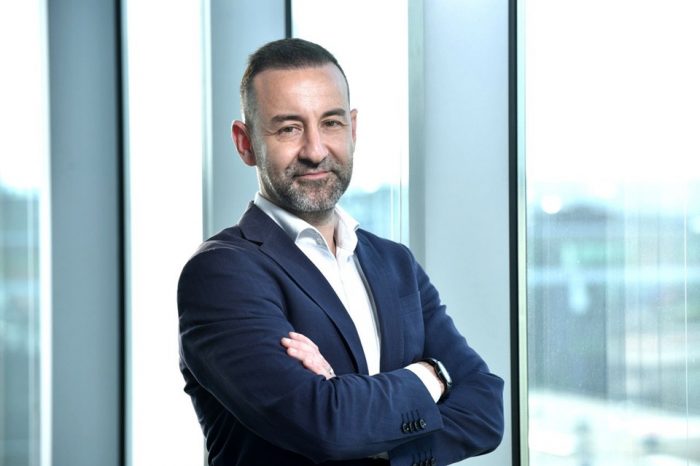
Opinions offered by: Luiza Müller, HR Director Orange Romania and Florin Iordăckioiu, Head of Culture & Organizational Development Orange Romania
This year, the business workplace environment is evolving faster than ever, shaped by economic uncertainty, rapid technological advancement, and shifting employee expectations. Organizations are recognizing that employee sentiment—how workers feel about their jobs, leadership, and company culture—has become a critical driver of performance, retention, and innovation. HR leaders are prioritizing agility, skills development, and employee well-being while leveraging AI-driven analytics to make data-informed decisions. Trends such as hybrid work optimization, diversity and inclusion reinforcement, continuous learning, and personalized employee experiences are defining the year, positioning HR as a strategic partner in building resilient, future-ready organizations.
We talked recently to Luiza Müller, HR Director Orange Romania and Florin Iordăckioiu, Head of Culture & Organizational Development Orange Romania about what defines the workplace in 2025, the company culture and its impact on the work sentiment along with other aspects of HR priorities and ESG initiatives.
Workplace Sentiment and Culture
How would you describe the current mood or sentiment within your workforce?
For several years now, Romanian labor market is facing unprecedented times having 4 generations at work at the same time, with different opinions, views and requests about work, way of working, job meaning, recognition, etc.
At Orange, 82% of our employees are Gen X and Millennials, 14% are Baby Boomers and 4% are Gen Z; when we think of the mood or sentiment within the workforce of our organization we tend to refer to the overall emotional tone, attitudes and feelings that employees collectively experience and express. It encompasses how employees feel about their work environment, management, job roles, and organizational culture at a given time. It is even more important for us, as we just passed through a very complex legal merge last year putting together people from 2 different organizations, with different cultures and ways of working.
Key aspects include: emotional atmosphere (the general feeling or vibe among employees, whether positive, negative or neutral); attitudes and perceptions (how employees perceive their work, colleagues and organizational policies); behavioral expressions (observable actions or communication that reflect underlying feelings); impact on performance: the extent to which motivation, productivity, collaboration and overall organizational health is being influenced.
These being said, there are a couple of things we like to mention to support how we practically manage the mood or sentiment within our workforce. In terms of general emotional atmosphere and also attitudes and perceptions, we designed and delivered to our colleagues a management tool that aims at modeling the culture of any team towards constructive behaviors with positive impact. It’s what we call the “Pulsometer”, a monthly survey that contains items deriving from the organizational values (e. g. I’m clear with the roles and responsibilities in my team.) Two tweaks to mention here: all items are at 1st person so to somehow include the respondent (instead of the conservative and rather restrictive approach of evaluating the manager – e.g. My manager explains to me the roles and responsibilities in my team.) and all teams have access, both manager and team members, to a final report under anonymity to be able to debrief and decide on potential next steps.
Another thing we truly believe in is the way we look at performance – it’s what we call an ecosystem between development and execution. While a myriad of programs supports the development of skills in Orange which is of paramount importance in the context of the speed of technological evolution (e. g. AI), execution is actually aimed at giving discipline of work based on 2 pillars: cadence of accountability (with objectives defined every quarter, feedback meaningful conversations, etc.) and capacity to influence to any employee, given by the fact the employee can lead rather than lag on his work (it’s one thing to do sales, wait for the end of the quarter and see how we did and it’s another thing to watch closely on your objectives and decide in advance what to do to improve your performance, so results become more and more guaranteed).
To conclude, we are constantly measuring and being preoccupied about the feelings and well-being of our employees; we have observed an ascendent trend in the eNPS (employees’ net promoter score) since the end of 2024.
What are you doing differently in 2025 to maintain or improve employee engagement and morale?
The latest practices to maintain or improve employees’ engagement and morale focus on creating a supportive, trustful, inclusive and motivating work environment. The most effective strategies we’re using at Orange are:
Flexible work arrangements
Offering remote work, flexible hours and hybrid models to support work-life balance. We’re also one of the few if not the only company in Romania that decided to pilot a full 30-days remote work for all employees during the month of August aiming at creating efficiency, lowering carbon footprint and offering employees the benefit of extended contact with the loved ones.
Regular feedback and recognition
Implementing continuous feedback systems and recognizing achievements to boost morale is another practice we’re illustrating with our “Valued by Peers” program – a platform that offers any employee the chance to send out to his or her colleagues appreciation messages, resulting in company-wide recognition on a variety of topics: collaboration, expertise, support, etc.
Professional development opportunities
Providing training, mentorship and career growth programs to foster a sense of purpose and progression. Besides already supporting our employees with development programs, which is somehow part of the Orange DNA, we’ve been also interested in creating the right infrastructure to pragmatically boost development. Therefore, one of the latest initiatives we have is to create a portal on a career evolution – in the same, one platform we’re hosting objectives, performance, talent, skills and culture topics. This new feature is meant at giving any employee visibility on his or her own current profile of skills vs. any other role in the organization, but more importantly indicating all the steps one should take in order to ensure a career transition from role A to role B.
Inclusive and transparent culture
Promoting diversity, equity and inclusion, along with transparent communication from leadership. Not only, but especially steamed up by the M&A we’ve been through with the former Telekom Communications, we’ve given special attention to the topic of diversity among generations. As we truly believe in the concept of wealth of expertise, we decided we have to work for an environment in which everybody feels included. And for us at Orange diversity and inclusion boils down to a couple of sentences: diversity is when everybody has a seat around the table; inclusion is when everybody can share his or her point of view on a certain topic. And, to link it with other of our concerns, engagement is when everybody expresses his or her views to its highest possible capacity. In this respect, we were fortunate to have a handful of encounters with Andrei Stupu, a remarkable young Romanian scientist, who managed to accompany us in exploring more in depth the relationship between generations.
Obviously, the list above is comprehensive, yet not exhaustive: there are many initiatives that work on well-being, purpose-driven work or leadership and so on. In the end, our work goes on fostering a culture of respect, collaboration, trust and fun activities to build more moments of “togetherness” and meaning. Implementing these practices can significantly enhance employees’ engagement and morale, leading to increased productivity and organizational success.
Are you seeing changes in how employees want to experience work — whether in culture, communication, or leadership style?
Based on current trends and evolving employees’ expectations, we have noticed 3 changes that employees may want to experience in their work environment:
- More inclusive and transparent culture (shifting from a Hierarchical and Opaque Cultures)
- Employees increasingly seek workplaces that promote diversity, equity and inclusion, where open communication and transparency from leadership foster trust and a sense of belonging.
- Flexible and remote work options (shifting from Fixed, In-Office Work). There is a strong desire for flexible work arrangements, including remote or hybrid models, allowing employees to better balance their personal and professional lives.
- Empathetic and participative leadership (shifting from Authoritarian or Directive Leadership). Employees prefer leaders who demonstrate empathy, actively listen and involve them in decision-making processes, creating a more collaborative and supportive leadership style.
These shifts reflect a broader move towards more human-centered work environments that prioritize well-being, trust, and empowerment.
HR priorities after midyear
Looking at 2025, after the first half year, what do you see as the most pressing HR priorities for your organization?
To provide a comprehensive overview of the most pressing HR priorities for organizations in Romania, we believe it’s important to consider the political, economic, social, technological, environmental and legal contexts. Therefore, in our view, a first-hand assessment of various contextual factors that impact HR priorities would include all the elements below, not limiting to them:
- Political: stability of the governing coalition, differences in nature and content of policies endorsed by each party.
- Economic: economic growth more or less significant, inflation variation, Romania’s rating among various agencies.
- Social: demographic shifts, workforce expectations, social unrest towards announced packages of measures.
- Technological: AI transformation, remote work, automation.
- Environmental: sustainability initiatives, green policies.
- Legal: employment laws, compliance requirements.
In this context and based on the current trends and the context of Romania in 2025, the most pressing HR priorities for organizations in the coming period are likely to include:
Talent acquisition and retention – with a focus on workforce retention which involves developing attractive value propositions to retain talent amid a competitive labor market.
- Digital transformation and up/reskilling – ensuring continuous learning initiatives to keep employees updated with new technologies, especially in the field of AI. Plus, and it’s a very big plus: enhancing digital infrastructure and policies to support flexible working arrangements, thus efficiency and performance.
- Employee well-being and mental health – promoting psychological safety and mental health initiatives to improve employee satisfaction.
- Diversity, equity and inclusion – fostering diversity in the workplace to reflect societal changes and push innovation.
- Legal and regulatory compliance – staying updated with changes in employment legislation, including remote work regulations, and ensuring a qualitative and beneficial social dialogue for all parties.
- Business performance defender – balancing compensation strategies with economic realities like inflation and preparing for economic fluctuations by flexible staffing and contingency planning.
Have you noticed any shifts in employee expectations or behaviors that are reshaping your HR agenda in 2025?
In 2025, under the impact of both internal and external factors, several shifts in employee expectations and behaviors are significantly reshaping the HR agenda. These changes are obviously linked to broader societal trends, technological advancements and evolving workplace norms. So, here are the key shifts in our opinion:
- Demand for flexibility and work-life balance – employees increasingly expect flexible working arrangements, including remote and hybrid work models;
- Focus on purpose and meaningful work – we see a strong desire for roles and ways of working that align with personal values and contribute to more personal or societal or environmental impact;
- Emphasis on personal development – expectation for continuous learning opportunities, up/reskilling and career growth under one critical condition: people choose what and how develop and/ or advance on their careers (see our “data pathways” program, re-/ up-skilling people on roles, such as data analyst/ scientist/ engineer);
- Mental health and well-being – after a tormented end of 2024 and beginning of 2025 in Romanian society, there’s a greater awareness and openness about talking and tackling topics like mental health supportive workplace environments and well-being programs;
- Transparency and authenticity in communication – in a highly manipulative environment we’re all part of everyday, whether it’s a desire for open communication from leadership regarding company goals, challenges and values or a preference for authentic and honest feedback within performance appraisal or talent review, employees want to build trust based on integrity and visible intentions.
What changes in the workforce or business environment do you anticipate in the next 12–18 months?
Connected to the previous question, in the context of Romania, in the next 12–18 months, we see several key changes in Romania’s workforce and business environment that are likely to occur. Here are some of the changes we anticipate:
- Continued usage of AI on a daily basis with more and more use cases – therefore, key question to answer to: how to obtain the best possible value of both AI capabilities and people potential?
- Aging workforce that’s leading to potential talent shortages in certain sectors, plus potentially a reignition of migration of young professionals abroad, impacting talent availability – one key challenge here will be solidarity within the business environment in Romania aiming at keeping Romanian talent at home.
- Economic recovery and growth on a gradual economic stabilization – how high the toll will be on both people’s patience and capacity of organizations to ensure engagement and retention in the context of pressure on wages and cost of living?
- Skills gaps and talent shortages under the pressure of persistent issues in high-tech, digital and specialized skills, plus an even greater emphasis on lifelong learning and upskilling programs to bridge these gaps.
- Social and cultural changes as we’re all part of one or more bubbles with impact in our lives as a hole, there will be a need for increased awareness and focus on mental health and employee well-being – will there be a clean cut between what’s happening in the online environment (e. g. tiktok, Instagram, X etc.) and what’s happening at work or the 2, 3 or more dimensions will mix in a more and more difficult to comprehend composition?
- Cybersecurity and data protection in terms of increased focus on safeguarding customer data and network security amid rising cyber threats – never ending effort on a plague that’s evolving and reinventing at an alarming speed.
What will define a successful HR function at your company by the end of this year?
On a straightforward note, we would say that a successful HR is a successful business: once the organization achieves its objectives, it’s naturally good news for HR also. On a more specific note, for us success in 2025 is about:
- Keeping our best people;
- Caring for all our employees in a way that will never answer to all needs, but will always need to illustrate “We care”;
- Contributing with all of our resources to answering to imperatives that are coming from our colleagues whether it’s about making things simpler or scraping old ways of doing things;
- Preparing to perfection to stay compliant with all regulations (see the EU Directive on Pay Transparency);
- Advancing in a more AI-enabled and more data-driven HR to improve our own ways and results, thus supporting the business to run faster and hit harder!