Booking Holdings Romania: We are simplifying complexities through automation
 Magda Purice
Posted On August 18, 2025
Magda Purice
Posted On August 18, 2025

Opinions offered by: Corina Făurescu, Senior HR Manager & Simona Grigoraș, Workplace Experience Team Lead at Booking Holdings Romania
This year, the business workplace environment is evolving faster than ever, shaped by economic uncertainty, rapid technological advancement, and shifting employee expectations. Organizations are recognizing that employee sentiment—how workers feel about their jobs, leadership, and company culture—has become a critical driver of performance, retention, and innovation. HR leaders are prioritizing agility, skills development, and employee well-being while leveraging AI-driven analytics to make data-informed decisions. Trends such as hybrid work optimization, diversity and inclusion reinforcement, continuous learning, and personalized employee experiences are defining the year, positioning HR as a strategic partner in building resilient, future-ready organizations.
HR isn’t just handling policies and payroll—it’s shaping the employee experience. AI-powered tools are helping managers spot engagement dip before they become resignations. Learning paths are personalized, hybrid work models are fine-tuned, and diversity and inclusion are being woven into everyday decision-making. The big trend? HR is moving from reactive problem-solver to proactive architect of workplace culture—building environments where people can thrive, adapt, and innovate, no matter what the future brings.
We talked recently to Corina Făurescu, Senior HR Manager & Simona Grigoraș, Workplace Experience Team Lead at Booking Holdings Romania about what defines the workplace in 2025, the company culture and its impact on the work sentiment along with other aspects of HR priorities and ESG initiatives.
Workplace Sentiment and Culture
How would you describe the current mood or sentiment within your workforce?
Corina Făurescu: At Booking Holdings Romania, we take pride in cultivating a positive work environment and culture where every employee feels valued and is encouraged to explore their full potential. Our survey data indicates that colleagues experience a strong sense of pride in working here, enjoy collaborating to achieve successful outcomes, and maintain a healthy work-life balance. Our annual engagement score over 90 reflects a vibrant culture where employees are motivated, enjoy their work, and feel they make a difference.
In addition to our annual and pulse surveys, we actively monitor feedback from our newest colleagues through a dedicated program aimed at capturing their overall sentiment. Addressing potential concerns early is a priority for us. We pay special attention to the feedback from new hires, particularly during their first year, and data shows they are especially positive about the friendly atmosphere, the support they receive from both team and company, the learning opportunities available, and the overall culture of care, engagement, and dynamic work.
Our recent Great Place to Work certification further confirms that our employees see the company as a positive and supportive environment, characterized by trust in leadership, pride in their work, and strong professional relationships. The areas where we received the highest scores—innovation, hospitality, and respect—are core values we strive to embody daily. These results underscore our success in nurturing a workplace culture that encourages creativity, demonstrates genuine care, and values mutual respect.
What are you doing differently in 2025 to maintain or improve employee engagement and morale?
Corina Făurescu & Simona Grigoraș: Our 2025 People strategy is centered on cultivating a great workplace by enhancing the employee experience and building a future-ready organization. We’re doing this by driving a few core initiatives:
- We’re elevating the employee experience through engaging initiatives. We host a variety of events, educational workshops, wellbeing initiatives, and recognition programs to build a strong sense of belonging and open communication. A great example of this is our new internal podcast, “Excellence Unlocked,” where colleagues share their stories and highlight their contributions to our company’s success.
- We’re building a culture of continuous learning and innovation. While traditional training is important, we believe learning should be part of our daily work. To make this a reality, we’ve created Communities of Practice—both physical and virtual spaces where employees with shared interests, like our “AI&Friends” group for AI experimentation, can connect, collaborate, and grow together. We’ve also launched Community Groups for hobbies like sports and books, helping our people connect on a personal level.
- We are simplifying complexities through automation. Our goal is to make work easier and more efficient. A recent example is the Learning App we built in-house to streamline the learning process for all employees.
- We are also directing a lot of effort towards creating a sense of purpose, through meaningful ESG activities focused on three core pillars: Planet, Community Engagement, and Education. Our employees are the driving force behind our initiatives — they propose them, shape them, and bring them to life. We have continuously expanded our ESG program to include new causes, driven by increased employee interest and based on their suggestions and proposals. This high level of employee engagement is evident in the 56% increase in participants and volunteers in 2024 compared to the previous year. We also established an ESG committee, where employees actively share ideas for new volunteer opportunities and are deeply involved in their execution.
Are you seeing changes in how employees want to experience work — whether in culture, communication, or leadership style?
Corina Făurescu: Our company’s last engagement survey delivered some great news: our flexible work arrangements were rated among the highest scores, confirming that employees feel satisfied and supported. We currently offer a hybrid model, an excellent office space, and a work-from-abroad option. This positive feedback shows that our current approach is working, but we are committed to continually seeking feedback to keep it relevant.
Communication also received high marks. We use a wide variety of channels, from our podcast to in-person events and surveys, to ensure our messages are clear and accessible. We don’t just rely on formal surveys; we also gather feedback after every event to capture real-time sentiment and suggestions.
Our culture of ethics and respect is a core priority. Our values are integrated into every aspect of our work, especially in how our leadership sets an example. The survey data shows that employees feel respected by one another and that managers uphold high ethical standards. We believe our employees and managers are co-creators of a respectful, open, and ethical culture. This truly shows that our employees and leadership are building this culture together. To further strengthen this, we have developed and are implementing a new leadership model for our center of excellence to ensure all managers share the same values, standards and behaviours.
HR priorities after midyear
Looking at 2025, after the first half year, what do you see as the most pressing HR priorities for your organization?
Corina Făurescu: In a fast-paced world, organizations must adapt quickly to stay relevant. As we enter the second half of the year, we remain committed to our HR roadmap, with a sharper focus on key areas:
Future-Proofing Our Workforce: We prioritize continuous learning, especially in the AI era—upskilling employees in technical, critical thinking, creativity, and emotional intelligence. We are embedding learning into daily work through communities of practice to keep skills relevant and to help employees share knowledge and grow together organically in their daily work.
Enhancing Employee Experience: Today’s employees seek purpose, belonging, and trust. We’re expanding support for mental wellbeing, fostering transparent communication, and empowering managers with leadership skills to create a positive, empathetic culture. Our new leadership model is designed to equip them with the skills they need to be effective coaches and mentors. To build trust in our hybrid environment, we use diverse communication channels and actively seek employee feedback. We believe that transparency around business decisions and the “why” behind our strategies is essential to making sure our employees feel heard and our policies are clear.
Strategic Workforce Planning: In a competitive market, retention is crucial. We focus on developing career paths, providing regular recognition, and ensuring our compensation and benefits are competitive and transparent. We are also exploring how technology, and automation can help us to simplify HR processes and boost our efficiency. This allows our HR team to move away from administrative tasks and focus on more strategic, high-impact work that directly supports the business.
Our goal is to build an agile, human-centric, data-driven workplace that prepares us for the future while remaining a great place to work today.
Have you noticed any shifts in employee expectations or behaviors that are reshaping your HR agenda in 2025?
Corina Făurescu: Our People roadmap is always guided by the voices of our employees through surveys and ongoing feedback. The core of employee expectations hasn’t changed dramatically; rather, they’ve solidified in alignment with global trends. We’ve seen that a modern workplace with flexible options is now non-negotiable. To meet this, our HR agenda is centered on empowering managers to build trust, cultivating a culture of excellence, and ensuring our offices are hubs for connection and collaboration.
Employee wellbeing is another key focus. This year, we’ve launched a comprehensive Wellbeing strategy that addresses physical, mental, emotional, and financial health. Since managers are critical to this support system, we are providing them with ongoing training to build their capabilities and help them meet the diverse needs of their teams.
We’re also making sure our employees are future-ready through continuous learning. To help our teams navigate the rise of AI, we’ve launched an AI Hub with resources and practical guides. Additionally, we’re developing Communities of Practice and other peer-to-peer learning initiatives so that our people can share knowledge and grow together in the flow of their work.
What changes in the workforce or business environment do you anticipate in the next 12–18 months?
Corina Făurescu: In a rapidly evolving global environment, market trends indicate that over the next 12 to 18 months, AI will become increasingly integrated into employees’ daily workflows, effectively becoming a co-worker. Employees will collaborate closely with AI systems, making upskilling and reskilling vital to their success.
For managers and organizations, fostering a culture of adaptability is essential—encouraging employees to reinvent themselves and embrace technological transformation. This shift will require redefining jobs and processes around AI and supporting employees through the transition to new roles and responsibilities, presenting both a challenge and an opportunity for growth.
What will define a successful HR function at your company by the end of this year?
Corina Făurescu: In essence, the success of our HR function can be measured not only by the achievements of our set objectives at the beginning of the year but also by the way these objectives are met. That’s why, when developing our annual People roadmap, it’s crucial to consider the broader business context, gather employee feedback, and align with future aspirations—while maintaining the flexibility to adapt as circumstances change.
At a high level, indicators of success include maintaining a strong engagement score, low attrition rates, leveraging automation and policy updates to improve the employee experience, and implementing relevant learning and talent development programs. These measures collectively reflect our progress and effectiveness.
ESG and HR’s Role
How involved is HR in shaping or supporting your organization’s ESG goals?
Corina Făurescu: Our HR team plays a pivotal role within the organization. We are in close collaboration with our ESG team and we’ve tailored our benefits package to actively support and reinforce our ESG commitments: all employees are given paid time-off to volunteer for causes that are meaningful to them, helping build stronger relationships with communities and engage employees to make a positive impact.
What specific ESG-related initiatives are your team leading or contributing to this year?
Simona Grigoraș: We add new causes to the program due the increased interest of the employees to participate in our activities and based on their suggestions or proposals.
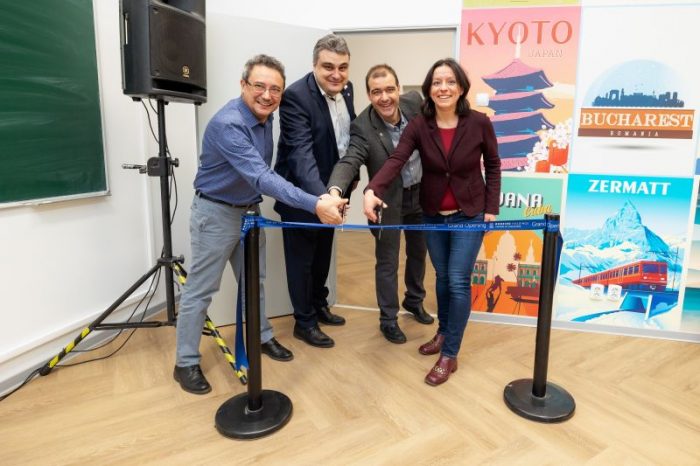
We collaborate with NGOs and we support meaningful projects that aim to protect the environment, and support the communities around us — trees planting, fundraising exhibition sales, donations of essential school supplies, donation of Christmas presents for children in need, blood donations, renovation of a social-community project consisting of the rehabilitation of a house which will serve as a Resource Center and training workshops for children in SOS Children’s Villages programs, a mountain trail maintenance, painting markings and clearing litter, classroom renovations for University Politehnica of Bucharest or through our MAGIS MUNDI program, which aims to facilitate transformative career shifts.