Association Business Service Leaders: two-thirds of Romania’s business services companies have transformed at least one service with AI
 Magda Purice
Posted On November 19, 2026

Romania’s business services industry is moving from a cost-based model to a capability-based one that also incorporates AI tools: 60% of the companies analyzed in a survey already use artificial intelligence solutions, and more than two-thirds (67.9%) have transformed at least one service with AI, according to the study “Building Romania’s Next Advantage 2026 – Talent, Transformation and Sustainable Growth in Business Services”, conducted by PricewaterhouseCoopers Romania for the Business Service Leaders Association (ABSL).
The study was launched at ABSL’s 14th Annual Conference, Romania’s business services industry flagship event. The analysis is based on data provided by 61 companies in the business services and outsourcing industry, which together employ more than 50,000 people, as well as a survey of employee salaries and benefits, conducted on a sample of 41 companies.
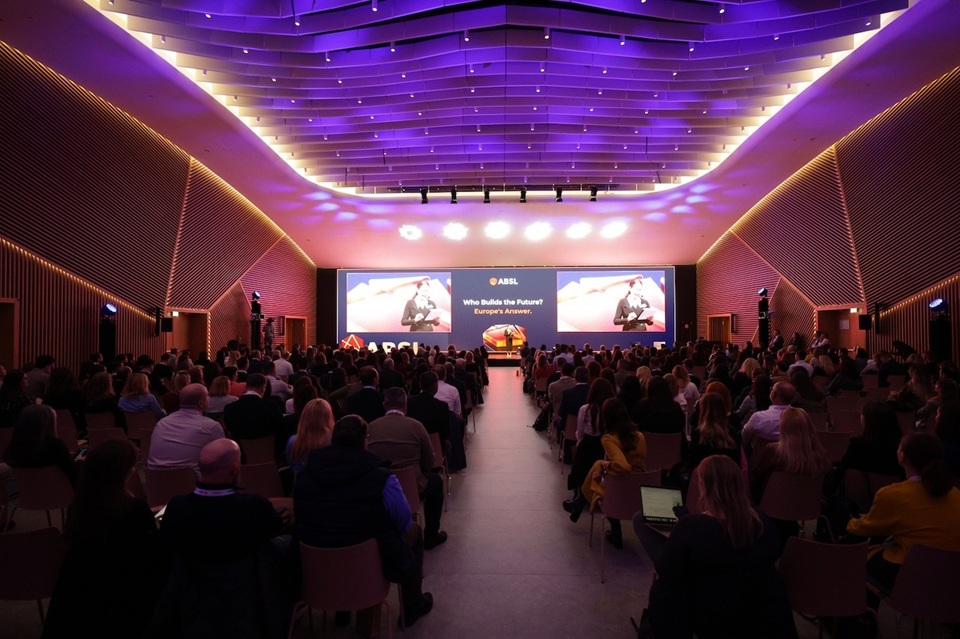
Held under the theme “Who Builds the Future? Europe’s Answer”, the ABSL conference brought together more than 500 industry professionals and leaders to discuss how technology is transforming the sector, and the options European economies have to remain competitive in a global context where productivity is increasingly linked to innovation and to the ability to integrate technology into the value chain.
From cost optimization to value creation
The sector has moved beyond the model of single-function service centers: only one of the participating companies still describes itself as such in 2026, with most centers offering several functions and/or serving multiple clients.
Overall, the impact of technology is already reshaping the industry’s long-standing corporate mission, shifting the focus from cost optimization to value creation: 43% of responding companies want to be seen as business partners or drivers of digital transformation, compared with 39% that aim primarily to operate as cost-efficiency centers.
Accelerated AI adoption, but awaiting scaling
In contrast with the relatively high rate of AI tool use – recorded among 60% of companies – the integration of AI tools remains comparatively limited. Only one in five centers (21%) has incorporated use of AI into more than five of the services it offers, while 43% have transformed at least three services using artificial intelligence. At the other end of the spectrum, 32% of companies have yet to offer any service reshaped or augmented by AI, with the data pointing to significant growth potential both horizontally and vertically.
On the other hand, AI integration brings tangible benefits in most cases: 62% of the companies included in the study report productivity gains of 5% or more, and almost one in ten (9.4%) records spectacular productivity gains, of over 20%.
A gap between capabilities and existing innovation infrastructure
Most companies in the sector (58.8%) that have centers of excellence – dedicated units that bring together experts, methodologies, standards, tools, and best practices to improve the quality, speed, and consistency of work processes – have a center of excellence dedicated to AI / machine learning, which is the most common area of focus.
Organizational infrastructure, however, does not match existing capabilities: just over half of companies (52%) have implemented a formal system to scale idea to practice, and only 44% have teams or roles in place that are explicitly dedicated to innovation. In addition, only 20% of companies have a separate innovation budget, while 32% have no dedicated innovation infrastructure at all.
What is clear, however, is that innovation is producing tangible results: 60% of companies report measurable cost savings, 48% have developed their own tools or platforms, 44% have launched new products or services, and 40% have run pilot projects for their headquarters or other global units.
The skills of the future in the business services sector
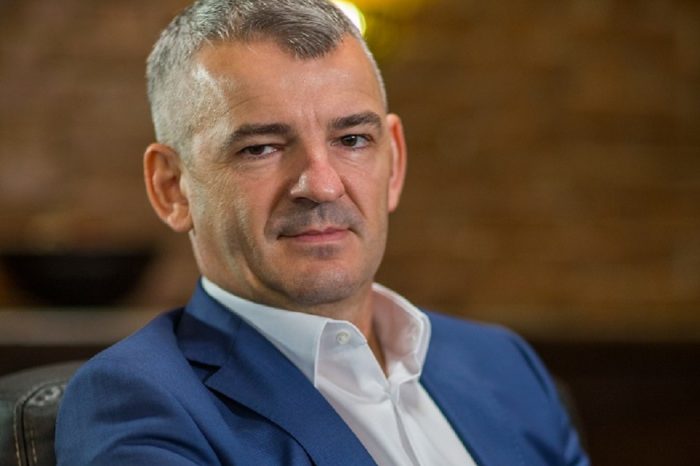
“Most business service centers in Romania are already operating with AI, and the skills in demand are increasingly business transformation, data analysis, and product management. The challenge for the coming years is to move from pilot projects to large-scale implementation, and from execution to decision-making. Today, only one in 20 service centers in Romania has full strategic autonomy within its parent organization. We need investment in skills, education that is tailored to new work profiles, and a predictable tax and legislative framework, which companies in the sector see as the main short-term risk,” says Adrian Baron, President of ABSL.
The impact of AI technology is already visible in the growing demand for multidisciplinary skills within teams. Comparing the current situation with expectations for the next year, the largest increase among skills considered highly important is in IT vendor and contract management; 40% of companies, double the current share, expect this skill to play an important role next year. Following is data analysis for employees outside IT departments (from 37% to 47%), AI literacy for non-IT staff (from 48% to 58%), change management, cybersecurity, and automation.
Romania and Europe in the AI era
Romania remains attractive, and its advantages are vanishingly less about cost: 89.8% of companies name language skills as the main asset, followed by the availability and quality of human resources (86.4%), digital and technological infrastructure (86.4%), the ratio between productivity and labor costs (78%), and the business services ecosystem (64.4%).
“In the coming years, Romania’s competitive advantage will depend on the local industry’s capacity to leverage its people, accumulated expertise, and digital infrastructure so as to become a leader in areas like automation and high value-added services. Today, more than 44% of companies cannot separately quantify their return on investment in transformation, which limits the effectiveness of capital allocation. This challenge can, however, be turned into an opportunity for development, provided we act quickly and strategically, in a context where competition is no longer only regional but global,” says Francesca Postolache, Partner, PwC Romania.
Deloitte: Romania, Europe’s second-largest business services market
These findings are supported by the updated edition of the “Business Services Comparative Analysis 2026” study, conducted by Deloitte Romania for ABSL, which includes ten European countries and three Asian markets. According to the study, Romania has Europe’s second-largest business services market by gross value added, after Poland. The sector generates 10.3% of the economy’s gross value added and has approximately 280,000 employees.
Cost competitiveness is holding up despite inflation, which is expected to fall to 4% only from 2028 onwards and below 3% by 2030. Deloitte’s simulations of total employment cost for a mid-level accountant place Romania 4th out of 13 markets in 2026, after India, the Philippines, and Bulgaria, and show that the country will remain Europe’s second most attractive location in terms of labor costs until 2031.
“The business services industry is today one of the key sectors of Romanian economy, generating around EUR 35.5 billion in gross value added, the equivalent of approximately 10% of the economy’s gross value added. Romania has everything it needs to keep attracting strategic investment, thanks to the combination of available talent, high productivity, and the development of regional hub cities, opening up new opportunities for expanding the industry nationwide. The challenge in the coming years will be to leverage these advantages to attract increasingly complex projects based on technology, innovation, and advanced skills. Romania must compete not only on cost, but above all on the value it can generate for international companies,” says Cătălin Iorgulescu, Vice President of ABSL Romania.
***
Partners
We would like to thank our Event Partners – Transparent, YASH, ENGIE, Tenneco, SD Worx, VOIS, and ManpowerGroup – for their valuable involvement and contribution to the success of this year’s edition.
We also extend our appreciation to ABSL Strategic Partners – COS, Deloitte, iO Partners, ManpowerGroup, PwC, Regina Maria, Steelcase, and ZRVP, as well as Temu, E-commerce Partner, for their continued support of the association’s mission and their commitment to fostering collaboration, innovation, and industry competitiveness.
Studies
The “Building Romania’s Next Advantage 2026 – Talent, Transformation and Sustainable Growth in Business Services” study was conducted by PricewaterhouseCoopers Romania for ABSL, based on data provided by participating companies in Romania’s business services and outsourcing industry. The industry survey included 61 companies, while the survey on employee salaries and benefits covered 41 companies, together accounting for more than 50,000 employees. The analysis is structured around five themes: strategic maturity and governance, human capital and pay, artificial intelligence and transformation, value creation, and Romania’s competitiveness in 2027.
The “Business Services Comparative Analysis 2026” study, conducted by Deloitte Romania for ABSL, compares ten European countries (Bulgaria, Czechia, Estonia, Hungary, Latvia, Lithuania, Poland, Portugal, Romania, and Slovakia) and two Asian markets (India and the Philippines), based on data from Eurostat, national statistics bodies, international institutions, and Deloitte databases. The updated edition uses the latest comparable data available in November 2026.
About ABSL
The Business Service Leaders Association (ABSL) represents the business services sector, bringing together leading companies operating in areas like Shared Services Centers (SSC), Business Process Outsourcing (BPO), Information Technology Outsourcing (ITO), and Research & Development (R&D).

Trending Now

PwC announces FY26 global financial performance
You may also like