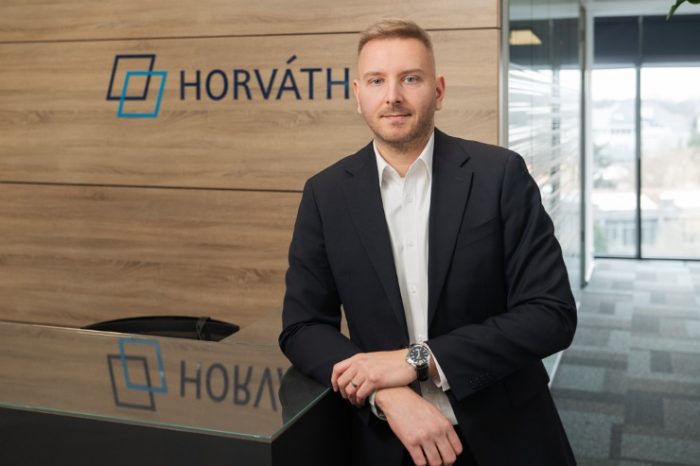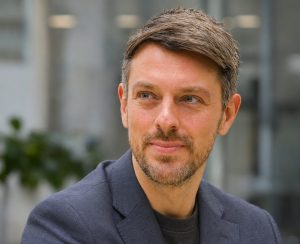
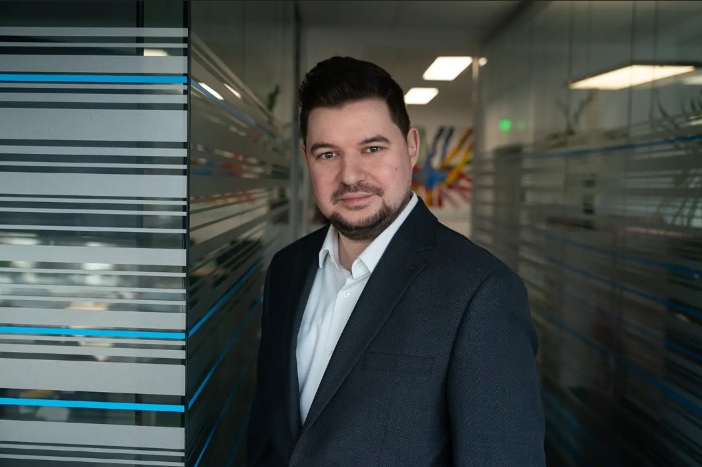
László Pálházi, Principal, Horváth Romania: Digital Transformation Enters a New Phase: Less Revolution, More Efficiency
 Magda Purice
Posted On November 18, 2026
For almost a decade, digital transformation has been associated with large-scale projects, huge budgets and multi-year programmes promising to completely reinvent companies. In many industries, implementing a new ERP system or migrating to platforms such as SAP S/4HANA was seen as the defining moment in an organisation’s modernisation journey.
Today, this model is beginning to change radically.
Not because technology has become less important, but because economic pressures have intensified significantly. Companies are expected to deliver results faster, at lower costs and with a visible impact within a much shorter timeframe. Against this backdrop, large-scale, monolithic transformation programmes are increasingly being called into question.
A new approach is emerging in their place: smaller, faster, sequential transformations, directly focused on delivering value.
The End of the “Mega-Project” Era
For years, companies approached digital transformation as a one-off event: a major project designed to change the entire organisation in a single move.
The problem was that such programmes came at a high cost: lengthy implementation timelines, enormous organisational complexity and benefits that materialised too late.
In the current economic climate, few organisations can afford to wait years to see tangible results. As a result, more and more companies are moving away from the “big bang” approach and opting for an incremental model: optimising specific processes, automating areas with the potential to deliver quick results and implementing changes in stages, without disrupting ongoing operations.
Digital transformation is therefore beginning to look less like a revolution and more like an ongoing process of adaptation.
Artificial Intelligence Is Changing Not Only Processes, but Transformation Itself
At the same time, artificial intelligence is accelerating this paradigm shift.
Until recently, artificial intelligence (AI) was used mainly for specific applications, such as chatbots, forecasting or simple automation. Today, it is increasingly being integrated directly into business processes and ERP platforms.
More importantly, AI is not only optimising operations; it is also transforming the transformation process itself.
Companies are already using AI tools for:
- automated process mapping;
- operational scenario simulations;
- identifying bottlenecks;
- estimating the impact on costs and efficiency;
- tailoring change management and training processes.
In other words, technology is beginning to accelerate the very process through which organisations transform themselves. But this also brings a major challenge.
Access to Technology Is No Longer the Main Problem
Technology is becoming increasingly accessible. Cloud, AI and automation solutions are widely available. The real difference between companies no longer lies in their access to tools, but in their ability to integrate them coherently.
And this is where many organisations encounter difficulties.
AI and automation can only work effectively when processes are standardised, data is consistent and responsibilities are clearly defined. Without these foundations, technology amplifies existing chaos rather than reducing it.
That is why one of the most important emerging trends is the renewed focus on standardisation.
For this reason, more and more companies are paying closer attention to defining a Target Operating Model (TOM), which establishes how processes, responsibilities, organisational structures and technology should work together. Without this foundation, transformation projects and AI-driven initiatives risk delivering limited benefits that are difficult to sustain over the long term.
Standardisation Returns to the Centre of Transformation
For years, many companies excessively customised their systems and processes. The result was a fragmented IT landscape that was difficult to maintain and even harder to modernise.
Today, organisations are returning to standardised processes and common data models. Not out of a desire for rigidity, but out of necessity.
Cloud solutions and new ERP platforms favour predefined processes and cleaner architectures. At the same time, AI and automation require consistent data and clearly defined workflows to operate effectively.
This shift is also evident in ERP transformation projects. More and more organisations are moving away from “big bang” approaches and choosing phased implementations focused on delivering benefits quickly and reducing risks. The emphasis is shifting away from extensive customisation towards adopting standard processes and the native capabilities of modern platforms.
Once regarded as a limitation, standardisation is now becoming the foundation that enables agility.
Digital Transformation Is Becoming a Permanent State
Perhaps the most important change, however, is a different one: digital transformation is no longer perceived as a project with a clearly defined beginning and end. Instead, it is becoming an ongoing organisational capability for adaptation.
High-performing companies no longer wait for the “big transformation programme”. They continuously optimise, implement changes incrementally and build organisations capable of evolving on an ongoing basis.
In this new context, competitive advantage will not necessarily belong to the companies that invest the most in technology, but rather to those that successfully combine three essential elements:
- standardised processes;
- sequential and disciplined transformation;
- intelligent use of AI.
Digital transformation is entering a more mature and pragmatic phase. The era of massive, slow-moving and difficult-to-control programmes is beginning to give way to a more flexible approach, focused on rapid value creation and continuous improvement.
In this new phase of digital transformation, competitive advantage will not belong to organisations that implement the greatest number of technologies, but to those that successfully combine standardised processes, high-quality data and artificial intelligence within a coherent operating model. The ability to turn technology into business value in a repeatable and scalable way will become the key differentiator for high-performing companies.
About Horváth
Horváth is an international, independent management consulting firm with more than 1,300 employees across Europe, the United States and Asia. For over 45 years, we have been supporting companies and public institutions in sustainably improving their performance by combining in-depth functional and industry expertise with technology and artificial intelligence capabilities. We help organisations turn strategies into measurable results.
Our global ecosystem of technology partners, software providers and systems integrators, together with a network of more than 3,000 Senior Advisors and Interim Managers, enables us to support transformation initiatives from strategic definition through to sustainable implementation and integration across the organisation.
With a presence in Romania for more than 20 years, Horváth is a trusted partner for companies and public institutions. The Romanian team has delivered more than 600 projects, with a cumulative value exceeding EUR 115 million, for companies across industries including energy, banking and financial services, courier and logistics, retail and FMCG, pharmaceuticals, the public sector and many others.

Trending Now

PwC announces FY26 global financial performance
You may also like