What kind of robots will you have at home in 5 years
 Magda Purice
Posted On October 26, 2026
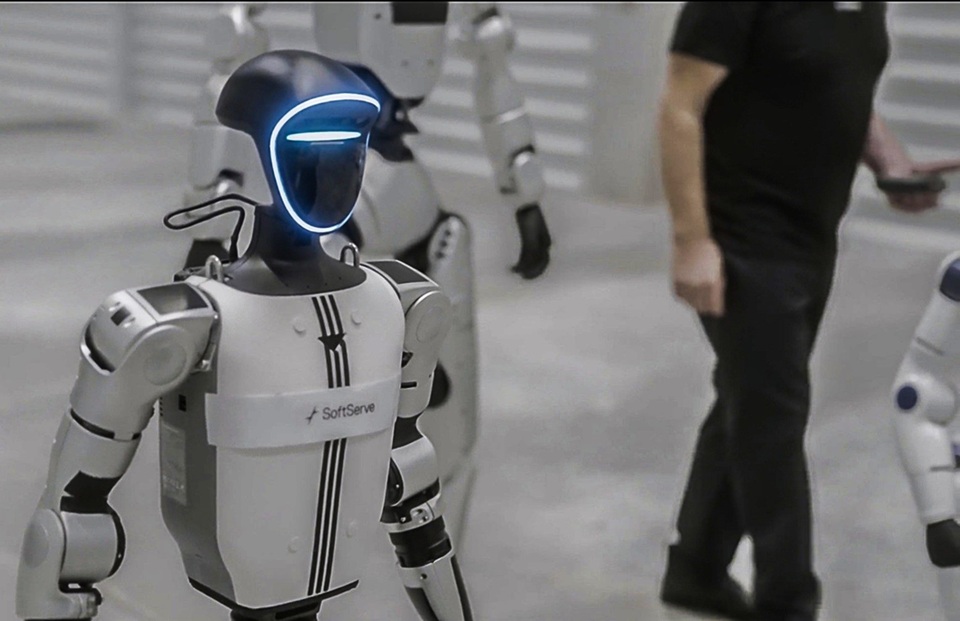
Rather than a single, all-purpose household robot, specialists expect dedicated robots for cleaning, gardening and other domestic tasks to be the first to enter our homes.
SoftServe, a digital engineering and technology services company specializing in AI, Data and Cloud solutions, conducted an internal survey among engineers on its robotics team to find out which robots could be the first to enter people’s homes and which ones they would choose for their own households. Following the robot vacuum cleaner, the next device that could become a common household appliance is a garden maintenance robot, selected by 27% of respondents, followed by a companion robot for elderly care, at 20%. By contrast, an all-purpose robot capable of handling a wide range of household tasks on its own remains a more distant prospect: 85% estimate that it will take at least five years for such robots to become a common presence in homes.
The respondents are members of SoftServe’s robotics team: 12% are junior specialists, 16% mid-level specialists, 18% senior specialists, and 15% hold lead, principal or more senior positions. The responses reflect the views of those who participated and offer a snapshot of opinions within the field, rather than a representative picture of the global robotics profession.
What Comes After the Robot Vacuum Cleaner
When asked which device could become the “next robot vacuum cleaner”—that is, a robot that becomes a standard household appliance—most respondents pointed to a garden maintenance robot, selected by 27%. A single robot that can distinguish a plant from a weed, prune a shrub, water each garden bed according to its needs, and harvest ripe fruit would need to manipulate soft, living and unpredictable objects, one of the most challenging problems in robotics.
The market already offers robotic lawn mowers with AI-assisted object detection, mowing robots capable of collecting and emptying leaves and plant debris with the help of an additional sweeping attachment, as well as modular systems for mowing, leaf blowing and snow removal. However, these products currently automate well-defined outdoor tasks rather than replace a gardener.
Another 20% of respondents expect companion robots for elderly care to become commonplace in households, while 11% selected ironing robots.
Which Robots Would Specialists Buy for Their Own Homes?
Robotics specialists also have fairly practical expectations. When asked which household robot they would personally like to own, 31% chose a robot capable of deep cleaning beyond vacuuming. Another 23% would prefer a general-purpose household assistant that could help with cooking, tidying up and small everyday chores, while 18% opted for a robot that could manage the entire laundry process.
Their preferences align with the current market, where robots designed for domestic tasks account for the majority of consumer service robots, while those performing more complex, human-centered care tasks remain a comparatively small niche. Global sales of consumer service robots grew by 37% in 2025, reaching nearly 34.2 million units, according to the International Federation of Robotics’ latest World Robotics report.
“We often measure progress in robotics by asking when we will have a single machine that can do everything. In reality, adoption usually happens one task at a time. A robot needs to perform a task reliably, safely and affordably in a messy real-world environment, not just look impressive in a demonstration. As a result, a machine that quietly eliminates an unpleasant household chore may reach millions of people much sooner than a general-purpose humanoid assistant,” says Lyubomyr Demkiv, Robotics and Automation Group Director at SoftServe.
How Long Until We Have a Robot That Can Do It All?
When asked when advanced robots would become a common feature in ordinary homes, 44% of respondents estimated a timeframe of five to ten years, while another 41% believe it will take more than a decade. No respondent expected this to happen in less than two years.
In the respondents’ view, some goals will take longer to achieve than public discussions sometimes suggest. These include fully general-purpose humanoid robots capable of performing almost any task; robots able to learn almost any new physical task from a simple verbal instruction; and AI and robotics systems capable of fully replacing skilled tradespeople, such as electricians or machine tool operators.
The common challenge behind all three developments is versatility. A robot designed for a single environment and a repetitive task operates under relatively predictable conditions. A general-purpose machine must perceive unfamiliar situations, manipulate a wide variety of objects, make decisions and operate safely around people, even when circumstances change. The International Federation of Robotics notes that real-world humanoid robots still require advances in areas such as manipulation, intuitive programming, economic scalability and safety.
However, reservations about universal robots do not mean that respondents are pessimistic about the field. On the contrary, 51% believe robots will improve their own lives to some extent over the next five years, while 20% expect a significant improvement.
About SoftServe
SoftServe is a digital engineering and technology services company specializing in AI, Data and Cloud solutions. With approximately 10,000 employees across 49 offices, from Latin America to the Middle East, the company operates across diverse markets and talent ecosystems. SoftServe has been operating in Romania since 2022, with offices in Bucharest, Cluj-Napoca and Iași.
SoftServe’s engineers and technical experts tackle complex, large-scale challenges, developing advanced solutions and products for global companies such as IBM, Cisco, Panasonic, Cloudera and Atlassian. The company’s portfolio includes more than 20,000 completed projects. SoftServe invests in expanding its technological expertise through strategic partnerships with Google Cloud, Amazon Web Services and Microsoft Azure. For four consecutive years, SoftServe has been recognized as a top NVIDIA partner, demonstrating extensive expertise in implementing advanced AI technologies.