Cognizant Romania: 5 changes that redefine software development in the age of AI
 Magda Purice
Posted On October 22, 2026

As artificial intelligence becomes business infrastructure, Cognizant Romania, one of the largest IT companies in the country, publishes 5 conclusions on how software development is changing, extracted from real projects delivered for global clients in banking, healthcare, insurance, retail and manufacturing. Cognizant is at the forefront of AI innovation globally and was the first IT services company in the world to obtain the ISO/IEC 42001 accredited certification, the international standard for the responsible management of artificial intelligence systems.
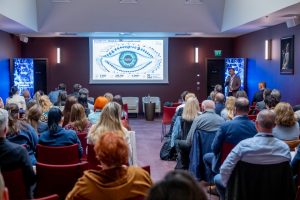
These insights were presented at Programmers’ Week 2026, Cognizant’s flagship event in Romania, held from September 21 to 25, inspired by the company’s tradition of innovation and learning. This year’s more than 20 technical presentations explored a main theme: how software development is evolving in the age of AI. From agency architectures and specification-driven development, to quality assurance, business analysis, and project management, the findings converge in a common direction. Human work is not disappearing, but reshaping. People spend less time writing repetitive code and more time designing solutions, defining rules, and validating results.
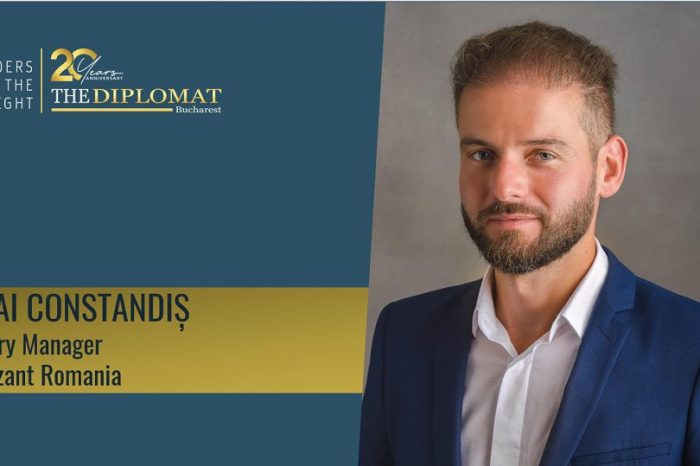
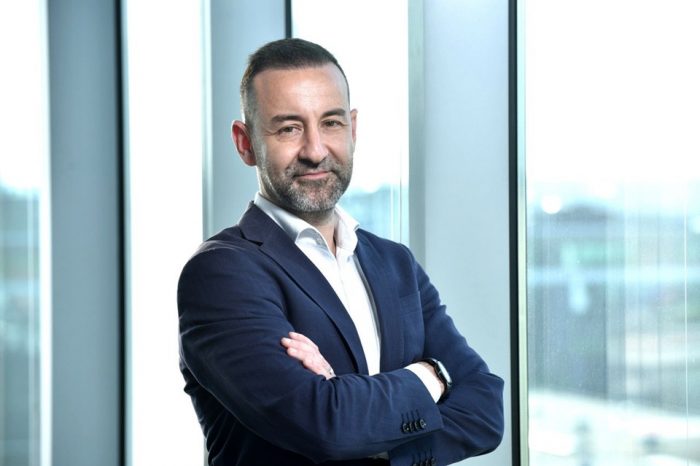
“The classic model in software services was built on effort: people, hours, capacity. The model we are moving towards is built on results. We no longer sell only the ability to write code, but business results that we assume. Cognizant’s global AI Builder strategy has several directions pursued simultaneously: increasing productivity in software development with the help of AI, moving business logic to an agent level of operation, and expanding the capacity of organizations through collaboration between humans and AI agents. At the heart of it all is a belief that we support with resources: AI amplifies human potential, not replaces it. Last year, Cognizant hired approximately 20,000 graduates globally at the beginning of their careers, and in 2026 the number will be even higher,” says Mihai Constandiș, Country Manager & Head of Romania Studios, Cognizant Romania.
Romania has a strategic execution role at this stage, being the largest Cognizant center in Eastern Europe, with over 2,500 employees in Bucharest, Cluj-Napoca, Iasi, Timisoara and Baia Mare, recognized as a center of excellence within the group. The teams here are working on strategic AI projects for the EMEA market – in banking, retail, healthcare, insurance and manufacturing – and some of the solutions also reach customers in North America.
“In addition, we participate directly in global initiatives such as AI Lab, where we work on the orchestration of AI agents, that is, on the way in which several agents collaborate to complete complex tasks. Romania is not only executing a strategy decided elsewhere, but actually contributing to its construction,” adds Mihai Constandiș.
1. AI proposes, people have the final decision
From engineering to QA to product roles, one point of consensus is that AI can take over tasks, but people remain responsible for the results. But for this principle to work, it must be integrated into the way of working, through clear points of approval, and not left to choice. In this sense, one of the ideas that came up most often in the presentations at Programmers’ Week is the separation of planning from execution. AI can analyze a requirement and propose a work plan, but the plan must be read and approved by a colleague before the first line of code is
written. Once approved, the plan becomes the reference for verifying the final result. Also, a task is considered completed when it passes the initially defined tests, not when the AI agent says it is done.
Another element concerns the placement of checkpoints. Human approval should be required where an action has consequences that are difficult to undo, for example when an agent writes to an external system or modifies a protected branch of code. The rest of the steps can run without interruption, provided that each stop is explicit and its reason is visible. The same logic is found in project management. Delegating a task to an AI agent is very similar to human management good practice: clear objective, context, constraints, acceptance criteria, feedback and validation.
2. Specialized agents, not a single general assistant
Expecting a single AI assistant to solve everything from analysis to testing has proven unrealistic. The results become difficult to verify, and when something doesn’t work it’s almost impossible to identify where it went wrong. The direction that works is where the work is broken down into small steps, and a dedicated agent is assigned to each step with a single responsibility.
An agent who does one thing produces predictable results that are easy to review and use in another project as well. In addition, each agent only gets access to the tools they need for their task, which reduces the risk of a mistake propagating.
The teams in Romania have already applied this approach in an internal toolset, built as an AI team: dedicated specialists for bug identification, code review, unit testing or technical documentation – on the development side and dedicated specialists for setting up test environments, automation, test documentation and generating test data – on the QA side. The same structure appears in quality assurance, where the flow is divided into distinct stages, from ticket and documentation, to test plan, test cases, execution and final approval, each stage having its agent and rules.
Over these agents there is a coordinator who establishes the order of the steps, keeps the information from one stage to another and stops the flow at the points where a person’s decision is needed. A useful distinction is that for open problems, where the path is not known in advance, an agent who decides the next step alone is suitable; for well-defined processes, which must be auditable, a pre-established sequence of steps is better.
3. Context matters more than the wording of the question/prompt
Progress doesn’t come from smarter questions to artificial intelligence, but from the information we make available to it – from team standards, work templates, to project documentation, business rules, and code history. An AI assistant who doesn’t know the team’s conventions will come up with something else every time, and colleagues will spend more time correcting than they would have spent writing from scratch. The solution is not for everyone to explain the context again at each work session, but for this information to be organized once and automatically made available to agents.
A concrete example comes from the Cognizant teams in Romania, who have built a common set of tools for working with AI – GenAI Toolkit, starting from three well-known problems: each colleague explains the project context from the beginning, each one has their own instructions,
and the results differ from human to human. The solution developed by Cognizant organizes the information into layers: valid general rules, company standards, programming language-specific rules, project rules and, finally, the preferences of each colleague, automatically activated depending on the type of file being worked on. On top of these, commonly used code patterns, business rules and specific information are added. For this way of working, internal measurements indicate significant efficiency improvements in each engineering cycle, increased quality in critical flows and considerably reduced irrelevant results in the process of detecting deficiencies.
The toolkit is adapted and improved by the teams that use it.
The same principle has emerged in the testing area. The success factor – a knowledge base built from the project’s existing code, supplemented with examples of formulations accepted and rejected in the past. AI tools change rapidly and are interchangeable, but structured knowledge of the organization is an important asset, because it can be moved from one assistant to another without being rebuilt.
4. Trust is built through engineering, not intuition
The real challenge is for AI to work consistently, predictably and safely. The difference between prototype and product was one of the dominant themes of Programmers’ Week 2026, and the technical response has four recurring components: grounding in the organization’s data, clear boundaries, evaluation and the ability to observe.
The results must be measured, not intuited. Evaluation must be treated as an engineering discipline, as serious as classic testing. In a scenario about a banking project, quality was measured on three levels: evaluations in the design phase for model and prompt quality, hallucination rate, adherence to instructions, and “toxicity”; evaluations on the entire agent, with its tools, queries, and data; and real-time evaluations, which verify the reliability and substantiation of each response before it reaches the user.
A second trust mechanism is pre-intervention classification – the rule of understanding a problem before solving it. In an automated testing pipeline, each failure receives a category, a confidence score, and evidence. Environmental, timing, or interface issues can be fixed automatically, while an actual application flaw always reaches the consumer.
Last but not least, independent review. AI should not correct its own theme: the review must be carried out by another model, with a separate context and other assumptions, applied after deterministic checks and before human decision. Audit agents report what they find, but they do not have the right to modify the artifact. This layered architecture is also the practical answer to the requirements of human oversight that become mandatory by regulations such as the AI Act.
5. Roles expand, not disappear
As AI takes over copywriting and repetitive work, the roles of business analyst, product owner, project manager, and QA move from deliverables to results, judgment, evaluation, and governance. Specifically, AI has strong capabilities in the area of prototyping, spec writing, gap analysis, and test generation, while humans remain responsible for defining the problem, performance indicators, governance thresholds, and strategic trade-offs.
How everyone understands their role matters. A professional who defines himself by the documentation he produces lags behind. The one who defines himself by the questions he asks and the decisions he supports becomes more valuable in the new economy. The practical goals discussed go both ways: a significant reduction in documentation effort and, more importantly, the ability to observe ahead of others when AI is wrong.
The way the requirements are written are also changing. For AI-based functionalities, acceptance criteria can no longer be formulated in terms of right or wrong, but in ranges and rules: for example, “correctly classify at least 90% of cases” or “no approval above a certain threshold without human validation”.
In project management, the evolution has been described on three levels that are already visible: AI as an assistant, efficient on the reporting and synthesis side; AI as an advisor, which helps to prepare discussions with customers and identify risks; and AI as an executor, which takes on clear tasks. The time saved does not automatically mean value created, but only space to create value. The difference is what you choose to do with the hours gained. In addition, in order to be able to correctly delegate to a team of AI agents, the project manager needs a better technical understanding than in the past, without this reducing the importance of judgment, communication and knowledge of the field.
About Cognizant
Cognizant (NASDAQ: CTSH) is a technology services provider and developer of AI solutions, building the bridge between artificial intelligence investments and business value through full-stack AI solutions for its clients. Deep industry, process and engineering expertise enables Cognizant to integrate each organization’s unique context into technology systems that amplify human potential, drive tangible results and keep global companies competitive in an ever-changing world. Cognizant Romania is one of the group’s largest technology centers in Eastern Europe, with over 2,500 employees in Bucharest, Cluj-Napoca, Iasi, Timisoara and Baia Mare.

Trending Now

You may also like