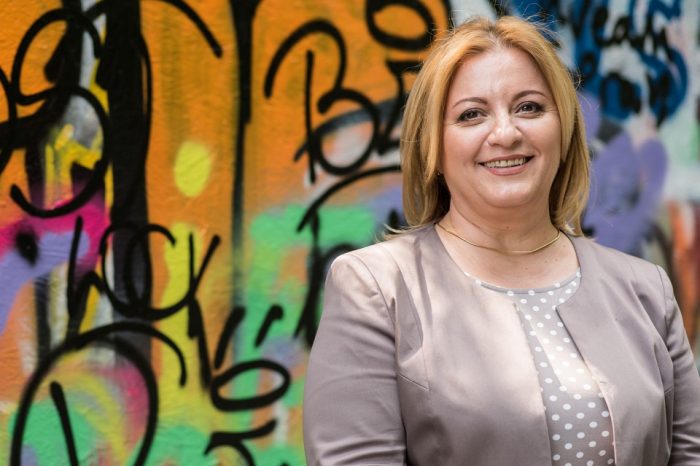
Alexandra Fus, General Manager, Valoris Center: Increasing efficiency while retaining our people is a top priority
 Magda Purice
Posted On September 18, 2025
Magda Purice
Posted On September 18, 2025

The workplace environment is evolving faster than ever, shaped by economic uncertainty, rapid technological advancement, and shifting employee expectations.
Organizations are recognizing that employee sentiment—how workers feel about their jobs, leadership, and company culture—has become a critical driver of performance, retention, and innovation. HR leaders are prioritizing agility, skills development, and employee well-being while leveraging AI-driven analytics to make data-informed decisions. Trends such as hybrid work optimization, diversity and inclusion reinforcement, continuous learning, and personalized employee experiences are defining the year, positioning HR as a strategic partner in building resilient, future-ready organizations.
HR isn’t just handling policies and payroll—it’s shaping the employee experience. AI-powered tools are helping managers spot engagement dip before they become resignations. Learning paths are personalized, hybrid work models are fine-tuned, and diversity and inclusion are being woven into everyday decision-making. The big trend? HR is moving from reactive problem-solver to proactive architect of workplace culture—building environments where people can thrive, adapt, and innovate, no matter what the future brings.
We talked recently to Alexandra Fus, General Manager, Valoris Center about what defines the workplace in 2025, the company culture and its impact on the work sentiment along with other aspects of HR priorities and ESG initiatives.
Workplace Sentiment and Culture
How would you describe the current mood or sentiment within your workforce?
Overall, our colleagues feel good and trusting, though there’s a natural sense of caution about the future, especially if economic or political changes are undergoing in the country. We’ve seen that such external factors tend to influence employee performance and sentiment directly and almost immediately.
What are you doing differently in 2025 to maintain or improve employee engagement and morale?
We’ve encouraged the leaders at Valoris to place an even stronger focus on open communication. We constantly create space for honest conversations where colleagues express their feelings, share expectations for the future, and tell us what they need in their roles to be more efficient. It’s a simple, yet efficient way to keep engagement high while making sure each person is and feels heard. It works best when people know they can open up without fear and feel comfortable asking for support.
Are you seeing changes in how employees want to experience work — whether in culture, communication, or leadership style?
Yes, changes are visible, especially in the way people prefer to communicate. Email is now the least effective channel, as it feels too formal and lacks personal touch. Instead, tools like WhatsApp and even social media work much better — they make people feel more at ease and more open to sharing their real expectations, concerns, and how they truly feel.
HR priorities after midyear
Looking at 2025, after the first half year, what do you see as the most pressing HR priorities for your organization?
Increasing efficiency while retaining our people is a top priority. It’s about supporting our teams to deliver their best work, while making sure they feel valued and motivated to stay. Today’s customers expect faster, high-quality service, and that is what we deliver at Valoris. Therefore, our focus is on retaining our colleagues, who perform and contribute to that level of excellence, ensuring they feel recognized and supported every step of the way.
Have you noticed any shifts in employee expectations or behaviors that are reshaping your HR agenda in 2025?
We’ve noticed that employee expectations are still strongly tied to both compensation and benefits, as well as to having the right technological tools that help them perform their activity better and faster. At the same time, we’re seeing behaviors shaped by caution — people are attentive and somewhat wary of changes in the economic and political environment in the region.
What changes in the workforce or business environment do you anticipate in the next 12–18 months
We expect to continue growing, but always with a solid foundation beneath us. It’s about expanding and evolving while making sure our teams feel supported, confident, and ready to tackle whatever comes their way.
What will define a successful HR function at your company by the end of this year?
For Valoris, HR success comes from helping our people grow and develop their expertise, while also keeping a focus on cost efficiency. It’s about supporting our teams to reach their full potential, while making thoughtful, sustainable decisions for the business.
ESG and HR’s Role
How involved is HR in shaping or supporting your organization’s ESG goals?
HR has always been one of the main drivers of our ESG efforts at Valoris. The HR function supports the company’s environmental initiatives in many ways — from implementing policies to encouraging simple everyday actions, such as recycling, saving energy, reducing waste, and promoting sustainable practices across the organization. Beyond the environmental side, HR also ensures that social and governance aspects are embedded in our culture, helping build an ethical, inclusive, and responsible workplace.
What specific ESG-related initiatives your team is leading or contributing to this year?
At Valoris, our approach to ESG is based on continuity. This year marks the third edition of our now traditional ‘Be Part of the Change’ initiative. For 2025, the challenge we launched encouraged colleagues to reduce waste creatively through an upcycle contest.
On the social side, we remain closely connected with Centrul de Zi pentru Copii “Căsuța Speranței”. Together, we organized a fair for ‘Mărțișor,’ and just a few days ago, we donated fully equipped computers to the children, helping provide them with the tools they need to learn and grow.