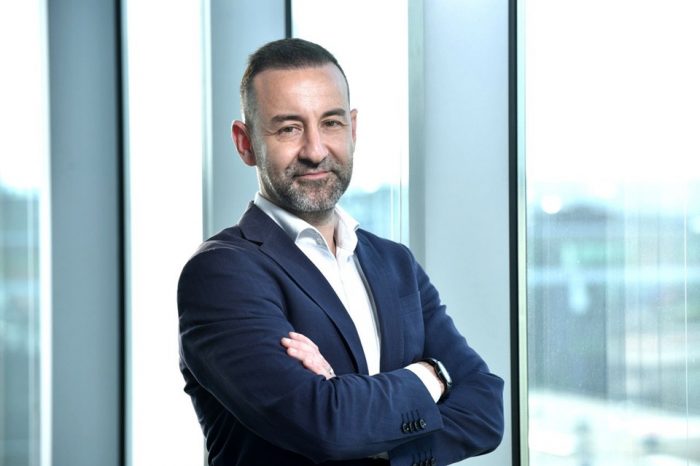
Laura Busu, Michelin CBS Romania: “The more a company invests in AI and technology, the more the people’s skills needed in that company are much more valuable”
 Petre Barac
Posted On May 28, 2026
Petre Barac
Posted On May 28, 2026
0
2.1K Views
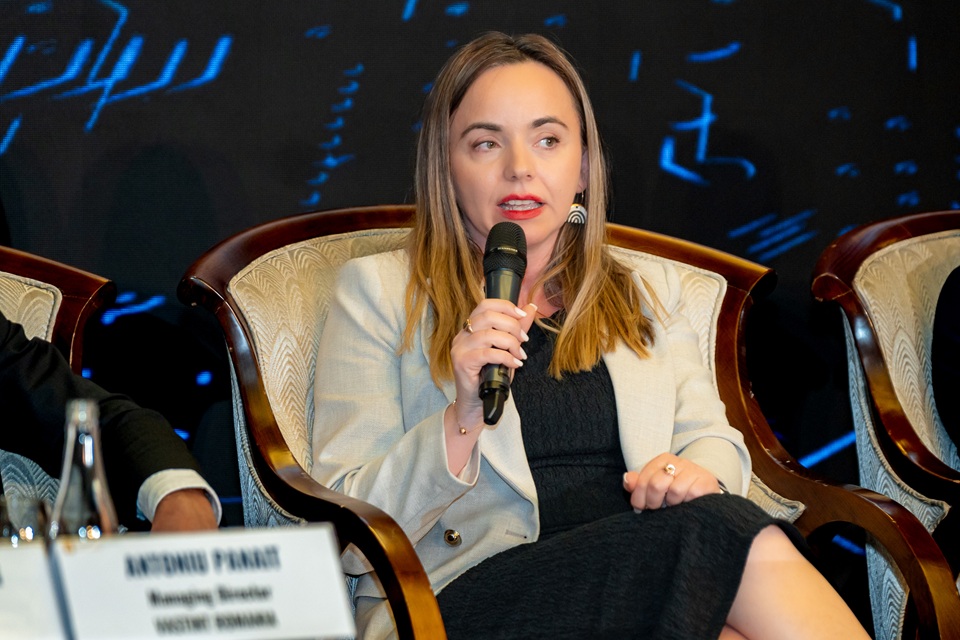
“We all like AI. We all have it in our pockets. The tricky part is that we don’t feel so comfortable when it comes to AI in the workplace. New questions are now arising. Will I still be competitive on the market? Will I be able to learn how to work with AI? For sure, it’s a mix of both.
We have enthusiasm. We can see enthusiasm around the fact that AI helps us reduce activities that are very repetitive, that they don’t bring value. However, we also see anxiety because we don’t know yet where it will stop,” Laura Busu, HR Director, Michelin CBS Romania said during Romanian Business Services Forum organized by The Diplomat-Bucharest and Outsourcing Today.
Key statements:
- People can adapt really good to change. Amazingly good. What we are struggling with, in general, is to adapt to a change that we don’t fully understand. We don’t really see where it will end. Basically, yes, upskilling but also communicating transparently. Because in some cases, you really don’t know how it will end up really.
- There is a very interesting paradox in the market I’m noticing right now. So basically, the more a company invests in AI and technology, the more the people’s skills needed in that company are much more valuable, not less valuable. At the same time, we are talking about AI and robots who can automate big chunks of work, but in the same time we have concepts like burnout.
- What happens is that, in the culture of the organization, we all know the Maslow Pyramid. And we know that security is right there at the base. That’s in the bottom. So basically, what AI is doing, if you don’t understand exactly the impact, is that it’s shaking the security, the feeling of security of your job that you are having in the company.
- So, what we need to do as employers is to balance and to stabilize this pyramid, because if not, it will be basically impossible to have a sustainable change in time. Because a sustainable change is only possible if people are feeling psychologically comfortable and safe enough to adopt it.
- We are now talking about four generations at work at the same time, and it’s never happened before. So basically, we are now facing a moment when we need to learn millennials how to coordinate Gen Z, for example, as a manager.
- However, I was thinking, and in Michelin, we use mentoring the mentoring. We have, indeed, like an average age of 34, but we have colleagues of 20 years old, and up to 60. And I think it’s a very good mix.
- Who can be easily skilled? Both generations, but the way we reskill them is quite different, because, of course, a young graduate might prefer to self-learn using AI, whereas people aged more than 40 years old might prefer in-class training. But in the end, if you keep the balance between generations, you’ll have a very good mix of what is necessary.