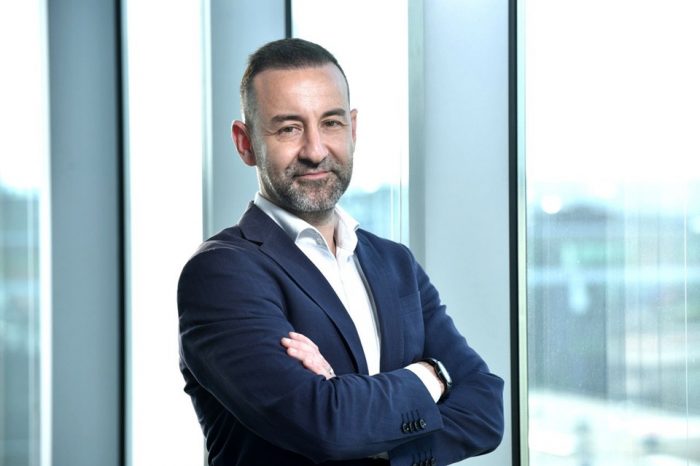
🎙️Mugur Pantaia, Managing Director, HP Inc. Romania: In the era of AI technology, customers expect greater efficiency, higher security and better experience, as well as less dependence on the cloud, from companies and professionals
 Magda Purice
Posted On March 3, 2026
Magda Purice
Posted On March 3, 2026

Outsourcing Today, the business services industry’s integrated networking and news platform, continues its interview series with leaders shaping the future of business services and related sectors. We explore key perspectives on the year ahead, strategic priorities, and growth opportunities.
Read below the key standpoints and perspectives of Mugur Pantaia, Managing Director, HP Inc. Romania.
AI redefines Productivity: Innovation matters only when it delivers measurable value, helping businesses grow, people work smarter, and technology serve clear economic and social goals.
How are the AI-based technologies changing your company’s competitive edge in 2026?
We are living in a new era of innovation defined by AI, which is a fact for anyone working in a technology-related field. At HP, we recognized this new reality years ago and embraced the potential of AI for the future of work from every perspective: business or sales opportunity, productivity, growth, flexibility, security and fulfilment. This is why HP is committed to on-device AI, responding to economic, operational and sustainability criteria.
Business leaders see AI as a catalyst for sharper focus and higher productivity, and HP provides people and companies with the right tools — products, solutions and services — to help them achieve their professional and personal goals. HP AI PCs are not just faster laptops; they are enterprise-ready platforms built on local AI, delivering speed, security, ROI and sustainability. AI is already redefining the PC; it is not just a future promise, but the driving force behind today’s market. Nearly 30% of HP PCs sold in 2025 included AI capabilities, as the adoption of AI PCs exceeded initial market forecasts.
What’s the biggest misconception business leaders still have about AI?
I believe a common misconception is that AI is either a plug-and-play miracle or, at the other extreme, a distant, risky science experiment that only global tech giants can afford.
For many organizations in Romania, the real value of AI doesn’t come from flashy use cases, but from practical, well-defined applications—improving demand forecasting, automating repetitive processes, enhancing customer support, or helping employees make better, faster decisions.
Another misconception is that AI is mainly about replacing people. In practice, the most successful implementations focus on augmenting human expertise, not eliminating it. Especially in markets like Romania, where talent is a strategic asset, AI works best when it helps employees focus on higher-value tasks, improves productivity, and supports innovation. As I often say, we should be more concerned about being replaced by a colleague with AI skills than we are about artificial intelligence itself.
Ultimately, AI is a business transformation topic, not just an IT one. Leaders who treat it as a strategic capability are far more likely to see measurable impact than those who see it as a shortcut or a threat.
Which business decisions in your company are AI-led?
Bucharest is one of the strategic locations for HP globally. At the HP Bucharest Hub AI is considered a core pillar, being integrated into internal processes with the goal of optimizing operational workflows and improving efficiency. I am proud to say that HP Romania is a center of excellence for AI integration in operations, with specialists creating and sharing AI-enhanced solutions used across HP’s global operations, thanks to the efforts, engagement and commitment of the local Bucharest Site Leadership.
HP Romania is rolling out the Workforce Experience Platform (WXP). Launched in Romania last year, this platform gathers data to anticipate and resolve IT issues before they occur, personalize technology recommendations, and reduce manual intervention, effectively helping leadership make data-led decisions about IT provisioning, employee support and productivity investments. HP’s Workforce Experience Platform now uses advanced AI to automatically remediate more than 12 million IT issues a month, globally.
HP’s business decisions in Romania also reflect a strategic focus on AI-ready products and solutions for customers. The company actively promotes its AI-capable devices (PCs, hybrid work solutions, print solutions with smart features) to local private and public-sector customers.
HP Romania’s business strategy is to support also local companies (business partners and customers) on adopting digital and AI-enabled tools through trainings and certifications dedicated to our business partners, customers targeted awareness marketing campaigns, as well support for using EU funds for digitalization. This means that AI is not only an internal consideration but also the meaning to take informed go-to-market and partnership decisions regarding how HP can position itself as a trusted advisor to Romanian businesses as they develop their own AI strategies.
How has AI changed what customers expect from your products or services?
In a nutshell, I would say that in the era of AI technology, customers expect greater efficiency, higher security and better experience, as well as less dependence on the cloud, from companies and professionals. As AI technology unlocks new possibilities, consumers can now process workloads more quickly, customize models and protect their privacy, all on their own devices. This is the future of work. Our annual HP Work Relationship Index survey indicates that companies with fulfilled employees are 21% more profitable, twice as innovative and 30% better at retaining talent. Organizations that provide their employees with the right tools are twice as likely to have a healthy relationship with work.
How do you stay differentiated in your market, what tools and competitive advantages do you leverage in 2026?
HP is collaborating closely with a rapidly expanding community of software developers to create robust AI solutions for businesses. HP aims to be the trusted leader in this new era of computing. We provide organizations with devices, platforms and digital services that increase productivity, reduce costs and deliver a measurable return on investment (ROI). By bringing on-device intelligence to enterprises, HP enables the faster, more secure and easier adoption of AI, enhancing performance, reducing latency, safeguarding data and cutting cloud costs.
As AI-powered threats evolve, HP ensures that they can be identified, contained and resolved using tried-and-tested solutions. Take HP Wolf Security, for example: our comprehensive endpoint security suite, designed to protect HP PCs and printers against advanced AI-driven threats such as phishing and ransomware, is hardware-enforced. HP is also the first to provide quantum-resistant BIOS security for PCs and printers, as we believe quantum-based attacks are a matter of when, not if.
I would conclude by saying that we are the only company in the commercial space that can offer customers a complete ecosystem of devices and we’re constantly improving how they work together seamlessly.
How do you balance rapid innovation with responsible and ethical AI use?
HP has established formal AI governance and ethical principles that guide how AI is developed, deployed, and used across its products and internal operations. These principles are designed to ensure that AI innovations are beneficial, secure, transparent and aligned with human values rather than just technically advanced.
Responsible AI at HP sits within a broader framework of corporate integrity and ethics. The company’s code of conduct, known as “Integrity at HP,” embeds ethical decision-making in everyday business practices, including in areas like data privacy, compliance, and reporting concerns.
As mentioned before, HP’s approach to AI emphasizes augmenting human capabilities, not replacing them. This human-centric focus helps build trust among employees, clients, and partners rather than positioning AI as an unchecked automation force.
What technology trend beyond AI should businesses be paying attention to now?
There are several other business trends that are very much relevant to the IT industry, and I have already mentioned them in my previous answers: edge computing, on-device cybersecurity becoming essential, hybrid work rapid expansion. In addition to those we should also consider the “migration” from transactional to contractual IT acquisitions. Companies increasingly subscribe to devices usage instead of buying them outright. We have seen already for some time this trend being shaped for all IT related businesses and not only. There are clear benefits for the companies adopting this shift: predictable costs, faster refresh cycles, bundled services and support. For HP Inc. this trend started approximately ten or even fifteen years ago with the printing business, now it is moving towards personal systems business as well. We offer both Managed Print Services and Device As a Service for our complete Printing and Personal Systems products, software and services portfolio.