🎙️Victor Vevera, General Director of ICI Bucharest: AI is a business model transformer. It reshapes how organizations generate value, manage risk, and engage with stakeholders
 Magda Purice
Posted On February 27, 2026
Magda Purice
Posted On February 27, 2026

Outsourcing Today, the business services industry’s integrated networking and news platform, continues its interview series with leaders shaping the future of business services and related sectors. We explore key perspectives on the year ahead, strategic priorities, and growth opportunities.
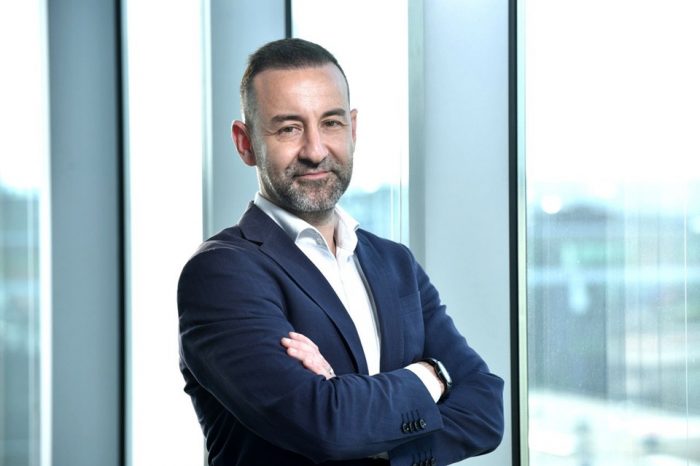
Read below the key standpoints and perspectives of Victor Vevera, General Director of The National Institute for Research & Development in Informatics – ICI Bucharest
The power words of 2026: Excellence. Security. Innovation
How is the AI-based technologies changing your company competitive edge in 2026?
As of 2026, AI is no longer an emerging capability, but increasingly important as a growth engine. AI strengthens our ability to deliver intelligent digital platforms, advanced cybersecurity capabilities, and scalable solutions tailored to both public institutions and strategic industries. Our competitive edge lies not simply in adopting AI, but in embedding it into secure architectures designed for complex, high-stakes environments. This enables us to innovate with confidence and to deliver measurable impact in resilience, efficiency, and operational performance.
Through the development of the RO AI Factory and the expansion of High-Performance Computing (HPC) resources, optimized to operate with AI, we contribute to creating sovereign capabilities that increase Romania’s capacity to be active within the European digital ecosystem.
Competitiveness based on AI does not arise from the adoption of AI technology alone, but also from the establishment of the infrastructure, the governance framework and the collaborative network required to deploy the technology in responsible and scalable manner.
What’s the biggest misconception business leaders still have about AI?
One of the biggest myths around AI has been that it is mainly a cost-cutting / operational reduction automation tool. In reality, AI is a business model transformer. It reshapes how organizations generate value, manage risk, and engage with stakeholders.
AI cannot be installed or used as a “plug-and-play” product. Technology by itself does not create advantage; strategic integration does.
The companies that gain real advantage are those that integrate AI into their strategic core – into governance, product development, and long-term business objectives – rather than treating it as a peripheral tool.
There is a need for organizations to invest in the appropriate IT infrastructure; to manage data effectively; to protect themselves against cyber threats; to leverage the skills and knowledge of employees; and to provide direction on ethics to successfully adopt AI.
Companies that choose to use AI solely as a means to increase their short-term efficiency may find that they have missed out on the strategic impact. Those that choose to embed AI into their long-term plans and objectives are those that will be able to compete with others in the next ten years.
Which business decisions in your company are AI-led?
AI is being used on a growing scale at ICI Bucharest in an increasing number of areas of both operational and strategic support – for instance in terms of performance optimization of digital infrastructures, predictive risk modeling, advanced simulation environments used in cybersecurity training and testing, etc.
It enhances our ability to process vast data volumes and respond with precision and speed. The AI-driven insights allow us to allocate resources more efficiently, prioritize interventions more accurately, and continuously improve system resilience.
However, scaling AI-driven operations does not mean ceding human judgment. Strategic decisions remain leadership-driven. AI accelerates insight; governance ensures direction, accountability and alignment with long-term objectives. This balance allows us to grow intelligently.
AI is not about replacing human expertise; it is about amplifying it and accelerating informed action. The true value lies in the synergy between human intuition and algorithmic precision.
How has AI changed what customers expect from your products or services?
AI has reshaped expectations fundamentally. The clients are no longer satisfied with systems that simply function; they expect systems that learn, adapt, and anticipate.
In addition to faster speeds and better performance, today clients seek proactive cybersecurity, flexibility, automated analytics, transparent algorithms, and seamless scalability, without vulnerability. As digital ecosystems expand, institutions want assurance that performance, data protection, and resilience will scale proportionally.
Increasingly important are the demands from customers for greater transparency and trust in the use of AI-based tools. Public sector clients desire assurances that the AI-based systems they utilize are transparent and auditable, compliant, and governed by ethical standards.
Building smart solutions is no longer optional; it is the baseline. Scaling responsibly has become the differentiator.
Briefly, clients now expect systems that are intelligent by design and future-ready – capable of evolving alongside international regulatory developments and security challenges. In this context, innovation must be continuous, not episodic.
How do you stay differentiated in your market, what tools and competitive advantages do you leverage in 2026?
Beyond functioning as a research institute, ICI Bucharest operates at the crossroads of advanced research, national digital infrastructure, and international collaboration.
Our differentiation stems from combining technological innovation with strategic trust – because we function in a highly demanding environment, where technological performance must coexist with national resilience and alignment with European regulatory frameworks.
We leverage applied research capacity, deep cybersecurity expertise, digital forensic capabilities, regulatory alignment at European level, and, last but not least – strong institutional partnerships. For instance, our organization links Romania to key European initiatives like EuroHPC and other parts of the broader AI Innovation Ecosystem. We are able to facilitate access to computing resources to support scientific research and industrial innovation and we will soon coordinate an ecosystem, possessing the applied expertise to utilize it.
In 2026, competitive advantage is defined not only by technological sophistication, but also by the capacity to scale securely and responsibly. Our market positioning reflects both innovation capacity and institutional reliability.
How do you balance rapid innovation with responsible and ethical AI use?
We do not see balancing rapid innovation with responsibility as a burden or an obstacle; rather, it is a condition of sustainable development. Rapid and scalable innovation requires governance frameworks that evolve alongside technology. The alignment with EU regulations on AI (EU AI ACT) and its principles is key to our responsible AI methodology.
Rapid innovation is sustainable only when responsibility is embedded from the start. At ICI Bucharest, we integrate security validation, risk assessment, compliance review, and human oversight into every stage of development.
Moreover, in the context of digital sovereignty, an ethical approach to technology represents an essential strategic asset to ensure that technological progress will remain consistent with democratic values and societal interests.
Innovation without governance creates fragility. Innovation with governance builds long-term competitive strength.
What technology trend beyond AI should businesses be paying attention to now?
Beyond AI, quantum technologies, HPC, advanced cybersecurity architectures will also play a role in shaping the next iteration of Digital Transformation. AI is inherently reliant on infrastructure (computational), secure data environments, resilient connectivity.
Additionally, distributed trust technologies, secure digital identity frameworks will also grow in influence as digital exchanges take place across industry boundaries.
As digital systems become more autonomous and interconnected, the ability to protect data integrity and guarantee secure interactions at scale will define market leadership. The next competitive frontier lies in combining intelligence with quantum-safe, interoperable digital ecosystems.
The convergence of AI, HPC, cybersecurity, trusted digital infrastructures will create competitive advantage for organizations over the next decade. As such, organizations that have an understanding of how these components work together will be able to manage complexity and build resilience.

Trending Now

You may also like