SoftServe: AI agents are becoming a reality. Top trends that will redefine how we work with these systems in 2026
 Magda Purice
Posted On February 18, 2026
Magda Purice
Posted On February 18, 2026

AI agents are becoming increasingly present in the enterprise environment, and 2026 confirms their transition to systems capable of executing complex workflows and contributing to operational decision-making.
However, the success of these projects in organizations remains dependent on well-defined processes, clean data and a solid infrastructure. In this context of accelerated adoption, but still in refinement, specialists from SoftServe, a global provider of IT consulting and digital services, analyze the key trends that will shape the development of Agentic AI in 2026.
Agentic AI is no longer just a trend, but a strategic direction supported by massive investments in infrastructure. According to McKinsey, 62% of organizations are experimenting with agent systems, and 23% are already expanding them on a large scale, signaling the transition from the pilot phase to enterprise implementations.
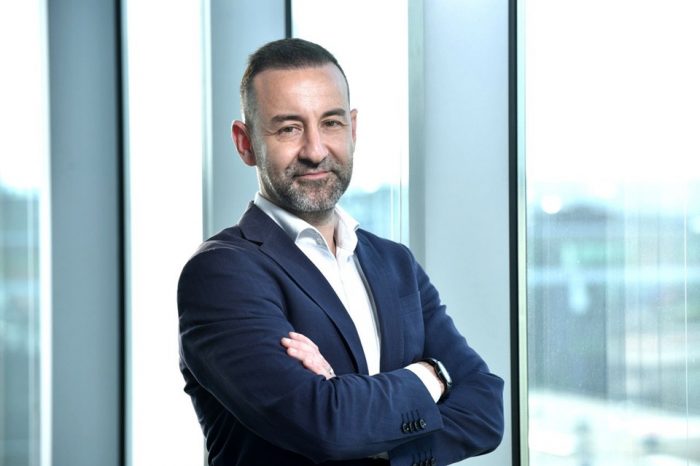
“We are increasingly seeing that AI agents are no longer just a promise or an experiment. In 2026, the difference will be made by companies that manage to orchestrate these agents efficiently, with control, predictability and human oversight,” said Bohdan Khomych, Associate Director R&D Products, SoftServe.
From writing code to coordinating AI agents
One of the most important changes in 2026 is the transformation of the role of software engineers. The focus is shifting from manually writing code to coordinating hybrid human-AI agent teams.
Specialists are increasingly becoming “coordinators”, responsible for validating agent results and integrating them into complex enterprise processes. SoftServe is already developing a platform that allows teams to manage multi-step agent flows – from requirements analysis to deployment – in a unified and controllable system.
The competition to attract developers
A major competition is taking shape around the “developer experience”. Tech giants will not compete exclusively on the level of AI models, but on the level of the ecosystems in which developers operate. If an engineer builds his solutions in the Microsoft, Google or OpenAI ecosystem, he is very likely to stay there for the long term.
Therefore, each company is accelerating the delivery of the most complete set of agent tools, counting on integration, ease of use and the ability to build autonomous end-to-end applications within its own platform.
The rise of multimodal agents
A central trend for 2026 is the evolution of AI agents beyond text, towards multimodal capabilities. Research is moving towards agents capable of analyzing and interacting with: video and audio, 3D scenes, complex digital environments. This direction opens up new applications in automated design, UI/UX generation, advanced visual analysis and the development of the concept of Physical AI.
Overall, according to SoftServe specialists, AI agents mark a paradigm shift: from AI as an assistant to AI as an active participant in operations and software development. Companies that invest in orchestration, integration, and surveillance will have a major competitive advantage in a technological context undergoing unprecedented acceleration.
But it is important to emphasize: we are still in a transition stage towards full automation.
“Each agent still has a human overseeing its activity, validating the results, and integrating the work done. Real systems where “an agent orchestrates other agents” do not yet exist in large-scale projects — the industry does not yet have clear standards, predictability, and the necessary level of trust. However, this is the obvious direction the ecosystem is heading, and 2026 will further highlight this evolution,” added Bohdan Khomych.
SoftServe is a leading provider of IT consulting and digital services, expanding the horizons of new technologies to solve today’s complex business challenges and achieve meaningful results for clients. Clients confidently rely on SoftServe to design and implement mature and innovative capabilities such as digital engineering, Big Data and analytics, cloud, and AI/ML.
SoftServe’s global reputation has been built over 30 years of experience delivering superior digital solutions at exceptional speed by top-notch engineers. The company serves enterprise industries including high tech, financial services, healthcare, retail, energy, and manufacturing.