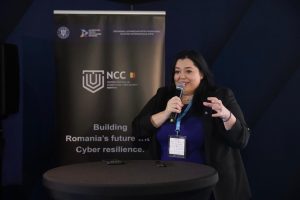
UVT Rector, Marilen Gabriel Pirtea, on AI: Romania does not only need the implementation of AI in schools, but an education system prepared for the AI era
 Magda Purice
Posted On January 15, 2026
Magda Purice
Posted On January 15, 2026

“For Romania, the best strategy in 2026 is not to rush to adopt AI in education, but to have the discipline to adopt AI in education with a clearly formulated purpose, with caution, with equity and with trained teachers. AI will enter education anyway; the difference will be whether it enters as a strategy or as an accident. Romania does not just need to implement “AI in schools”, but “education ready for the AI era”. The essential question is actually deeper: How much personalization do we want in education, what do we keep from the civic role of the school and how do we ensure that AI does not become a mechanism of isolation and stratification for students?”, the rector remarks West University of Timisoara (UVT), Prof. Dr. Marilen Gabriel Pirtea, based on the conclusions advanced in the report prepared by the OECD and published in December 2025.
OECD report on the topic “AI adoption in the education system“ presents a new logic necessary for a successful public policy: implementing AI in education does not only involve a technical modernization of schools, but also involves decisions about what kind of learning and what kind of school we want to have in the future. The document insists on an absolutely necessary working principle in this context, namely that the adoption of AI must start from the problems to be solved, not from the existing tools. Without this anchoring, we risk a “digitalization with unclear effects”, that is, money spent, based on high expectations, but with modest results. The UVT rector interprets the conclusions of this report:
“First, we note that the major lesson is that we identify the problem before choosing the AI tool. The OECD recommends that decisions about implementing AI in education start with identifying the problems that AI tools are intended to solve, then assessing the benefits vs. the risks involved, respectively the safeguards (data, bias, transparent procurement, continuous training). Why does this principle matter for Romania? Because in our previous practice, digital projects have frequently been driven by procurement and infrastructure, pressures related to the implementation schedule and financing, respectively by pilots without a rigorous evaluation of the results. If Romania imports AI into education in the same style as previous approaches, it will get “AI as an ornament”, that is, platforms used superficially, without systemic effect on learning outcomes and without guarantees regarding the fairness of the use of AI.”
“AI can be a tool for reducing inequalities, but also an accelerator of them. The OECD report relies on AI as a tool to address persistent disparities in the education system (e.g. monitoring school dropout, performance differences between schools, integration of students with vulnerabilities). However, it insists on a critical point, namely the inequality of access to AI tools (including access to “premium” functions of AI tools, high-performance devices, connectivity and human support), which can amplify existing gaps. In Romania, where educational inequalities are a structural issue, the rule of thumb is simple – if AI tools are implemented “on average”, they will be used mainly by high-performing schools and families with above-average material resources. Thus, without explicit equity policies, AI becomes a mechanism for stratifying students, not for their inclusion”, the UVT rector observed.
“Digital literacy is not optional, because without it students become passive consumers. OECD (2025) argues that education systems must build a digital literacy foundation for all students, so that they understand the capabilities and limitations of AI tools, interact effectively and responsibly with them, and understand the ethical and social dimensions of their use. The report also emphasizes that digital literacy does not only involve technical knowledge, but also includes critical thinking, awareness of bias, and cross-curricular integration, not being an isolated subject of study. For Romania, a serious strategy for implementing AI in education does not mean “introducing AI to computer science”, but involves developing digital literacy as a general competency, training teachers to teach and assess it, and establishing standards of academic integrity (in the GenAI era).”, adds university professor Marilen Gabriel Pirtea.
“We need caution and pedagogical design in implementing AI. The report proposes an essential working principle: caution is needed in implementing AI in education. For example, if a simpler technology achieves the same objective with lower risks, it should be preferred, especially for minor users and sensitive data. Thus, gradual implementation is recommended, with the establishment of clear limits on use and independent evaluations to be carried out before renewing licenses. For Romania, where the pressure for quick results is high, this idea is critical because AI should not become a machine to “facilitate” learning, but a tool that supports intelligent effort and quality feedback”, says the rector of the West University of Timișoara, Marilen Gabriel Pirtea.
“Last but not least, it is worth noting that the human factor is the real infrastructure for implementing AI in education. The report directly states that teachers remain central to implementing AI in education because they interpret analytical data, integrate AI tools into educational and learning activities, and shape student behaviors. Therefore, teacher training budgets must increase in line with spending on AI tools. It is worrying, notes OECD (2025), that in many countries teachers are not adequately involved in such decisions. In Romania, where continuous training is often formal and fragmented, the risk is that of adopting technology without developing the pedagogical skills associated with using AI tools, in parallel with increasing teacher stress and passive resistance or superficial use of the new technology.”, concludes the UVT rector.