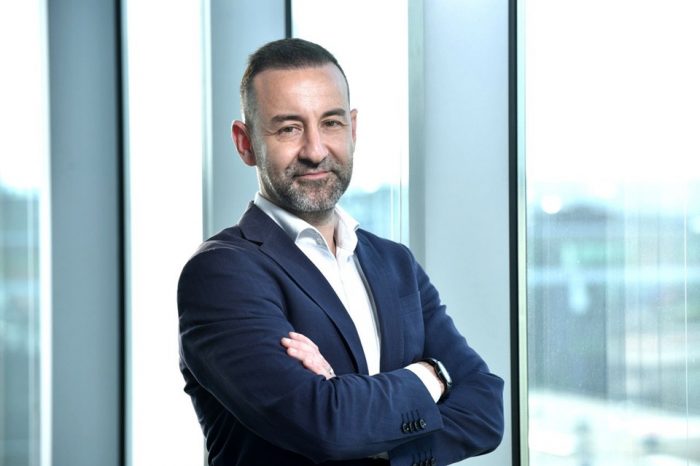
Mirela Stanciu, HR Specialist, Infosan: We’re focusing on programs that provide both professional experience and a real sense of belonging
 Magda Purice
Posted On September 15, 2025
Magda Purice
Posted On September 15, 2025

The business workplace environment is evolving faster than ever, shaped by economic uncertainty, rapid technological advancement, and shifting employee expectations.
Organizations are recognizing that employee sentiment—how workers feel about their jobs, leadership, and company culture—has become a critical driver of performance, retention, and innovation. HR leaders are prioritizing agility, skills development, and employee well-being while leveraging AI-driven analytics to make data-informed decisions. Trends such as hybrid work optimization, diversity and inclusion reinforcement, continuous learning, and personalized employee experiences are defining the year, positioning HR as a strategic partner in building resilient, future-ready organizations.
HR isn’t just handling policies and payroll—it’s shaping the employee experience. AI-powered tools are helping managers spot engagement dip before they become resignations. Learning paths are personalized, hybrid work models are fine-tuned, and diversity and inclusion are being woven into everyday decision-making. The big trend? HR is moving from reactive problem-solver to proactive architect of workplace culture—building environments where people can thrive, adapt, and innovate, no matter what the future brings.
We talked recently to Stanciu Mirela Daniela, HR Specialist, Infosan about what defines the workplace in 2025, the company culture and its impact on the work sentiment along with other aspects of HR priorities and ESG initiatives.
Workplace Sentiment and Culture
How would you describe the current mood or sentiment within your workforce?
The atmosphere within Infosan team is positive and strongly oriented toward collaboration. Over the past two years, we invested significantly in our organization’s culture, which brought visible changes in the way people relate to each other and to the hospital’s mission. Employees feel that they are part of a united community that offers support and growth opportunities, reflecting both our mission and two of our values: People and Learning.
What are you doing differently in 2025 to maintain or improve employee engagement and morale?
We’re focusing on programs that provide both professional experience and a real sense of belonging. One example is EyeMentor Practice, through which three young doctors, straight out of residency, spent three months working alongside experienced colleagues in pediatric ophthalmology. This experience not only strengthened their training, but also led them to become members of the Infosan team. At the same time, we used a specially designed meeting format to ensure management collaborated to address feedback from their employees and also close the loop with the employees. This helps foster open feedback and decision-making transparency, which further reinforced trust and motivation, in line with our commitment to Learning and Excellence.
Are you seeing changes in how employees want to experience work — whether in culture, communication, or leadership style?
Yes, there is a clear shift toward a culture based on collaboration, mentorship, and continuous learning. The EyeMentor Explore program, held in June with nine participants—residents interested in pediatric ophthalmology and surgery—clearly demonstrated that younger generations want to learn directly from established professionals and be part of a supportive community. Employees are seeking a more open and participative leadership style, one based on trust and autonomy, in line with our value of Integrity.
HR priorities after midyear
Looking at 2025, after the first half year, what do you see as the most pressing HR priorities for your organization?
After the first half of the year, our top priority is to strengthen our team and attract new ophthalmologists, particularly pediatric ophthalmologists. We’re aiming for a balance between the professional growth of doctors and support staff, and the high quality of care we provide to our patients. We will continue to invest in organizational culture, the goal being that each team member feels that they play an essential role in the hospital’s success. These priorities are directly connected to our mission of eliminating preventable blindness.
Have you noticed any shifts in employee expectations or behaviors that are reshaping your HR agenda in 2025?
Employees are placing greater emphasis on personal and professional development. They want access to mentoring programs, continuous learning opportunities, and an organizational culture that provides meaning and recognition. At the same time, maintaining a healthy work-life balance remains an important focus for them. These trends resonate with our values of People and Learning.
What changes in the workforce or business environment do you anticipate in the next 12–18 months?
We anticipate increased competition in attracting and retaining highly specialized doctors. At the same time, we expect more and more medical and administrative processes to automate or become IT-assisted, requiring employees to adapt rapidly. Over the next 12–18 months, we will focus on preparing our teams for these challenges, through training programs and by maintaining a stable and attractive work environment. This approach reflects our mission to provide accessible, innovative, and personalized care.
What will define a successful HR function at your company by the end of this year?
The success of the HR function will be defined by its ability to guide managers to create a context in which people feel valued, motivated, and helped to reach their full potential. We measure success through specialist retention, higher employee satisfaction, and the integration of new colleagues into our organizational culture. For us, a successful HR team is one that lives Infosan’s values every day: caring for People, encouraging Learning, striving for Excellence, and acting with Integrity.
ESG and HR’s Role
How involved is HR in shaping or supporting your organization’s ESG goals?
The HR department plays a central role in supporting ESG goals, since people are at the core of any sustainable initiative. We ensure that values such as social responsibility, ethics, and care for the community are embedded in the organizational culture. Through recruitment, training, and internal communication, we help build a team that shares the same principles of transparency, inclusion, and accountability. This reflects both our mission to enrich lives and our values of People and Integrity.
What specific ESG-related initiatives your team is leading or contributing to this year?
This year, we leveraged initiatives that promote the development of young specialists and their access to structured training programs, such as EyeMentor Practice and EyeMentor Explore. These programs reflect our values of Learning and Excellence and contribute to our social and educational goals.
Equally important is our screening program in schools and kindergartens, through which Infosan offers free ophthalmological check-ups for children. The aim is to detect eye problems early, so they can be treated in time. In 2024-2025, we screened over 3,000 children through this program, both in schools and at public events in Bucharest. In 2025-2026, Infosan plans to expand this initiative to reach even more schools and kindergartens. This directly reflects our mission of eliminating preventable blindness and our value of People.
As for the environment, we are working on optimizing resources and reducing our carbon footprint by going paperless for most of our administrative processes.