Zitec: A company should drive progress in society, especially when it has the resources, knowledge, and people who can create a real impact
 Magda Purice
Posted On June 26, 2026
Magda Purice
Posted On June 26, 2026
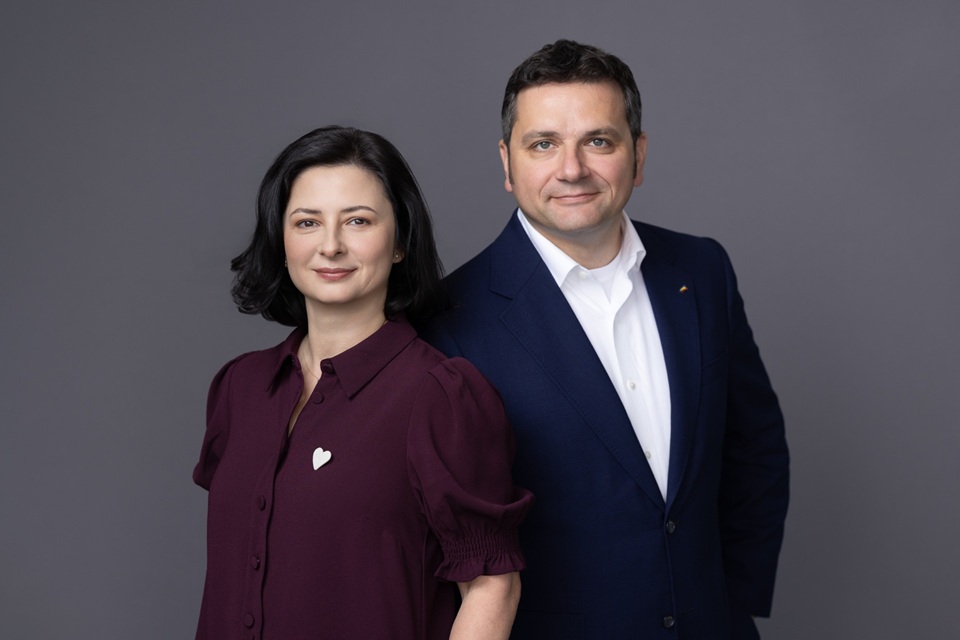
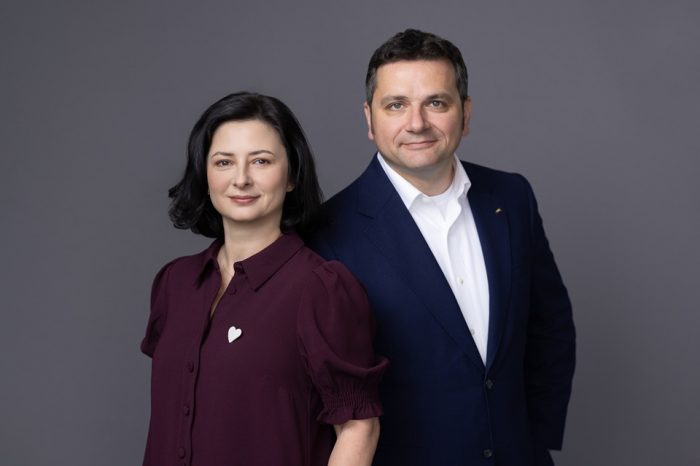
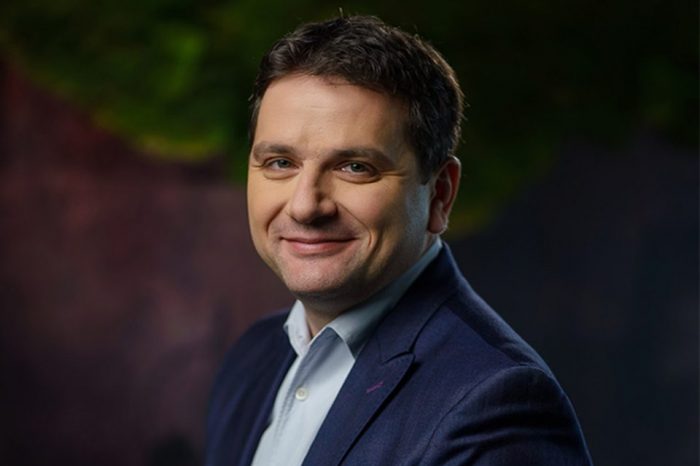
We recently talked with Alex Lăpușan, co-founder & CEO of Zitec and Simona Lăpușan, Co-Founder & Co-CEO of Zitec on their recently B Corp certification, about what is stands for for the company itself and in the global business landscape.
The context: Zitec, IT solutions and digital transformation services provider, has obtained B Corp certification, an international recognition of the company’s commitment to ethics and transparency in business. Awarded following a rigorous evaluation process under the B Impact Assessment, certification is awarded to companies that meet rigorous standards on social and environmental impact, governance, transparency and accountability towards stakeholders.
The international certification validates Zitec’s commitment to transparency, accountability and positive impact on customers, the community and the environment.
Find below the findings:
Why did Zitec pursue B Corp certification, and what does it represent?
Simona Lăpușan: My first contact with B Corp was in 2021, through a client from Canada. What immediately stood out to me was how naturally the B Corp framework reflected many of the values we were already building within Zitec: responsibility, transparency, long-term thinking and care for our colleagues, our clients, our partners and the community around us.
For us, pursuing the B Corp certification was not a makeover, nor was it about reinventing Zitec for the sake of a badge we could hang on our walls. It was a way to better measure, document and make more visible what we had already been building for years. The certification process itself (the B Impact Assessment) helped us bring more structure and clarity to actions already guided by our values. In that sense, it confirmed something very important to us: that responsible business was indeed part of Zitec by design. Since starting Zitec in 2003, we have been guided by a mindset of constantly learning, improving and making thoughtful choices: in the projects we pursue, the partnerships we build and the clients we work with.
We really hope that our example will inspire more Romanian companies that share similar values to explore the B Corp model and to appreciate it as a useful framework for measuring and strengthening the responsibility they are already building into their businesses.
What is the significance of B Corp certification in the global business landscape?
Alex Lăpușan: The B Corp certification challenges an outdated idea of business success. Profit is definitely important for a healthy business, but it cannot be the only meaningful indicator. A company also has to be accountable for the way it treats its people, its clients, its communities, and the environment it operates in. It also does not let companies hide behind nice statements; it brings structure, measurement, and external validation. In other words, it pushes businesses to prove that impact is not just a pretty word they mention in their annual reports but something embedded in the way decisions are made.
The global scale of the movement is also important. With over 10,000 certified companies across six continents, B Corp has become a common language for companies that believe business can and should do better. It shows that responsibility is becoming part of what credible companies are expected to demonstrate.
There is also a clear business argument. Data from B Lab UK show that small and medium-sized B Corps have grown faster than the national average, in both turnover and headcount. That is a strong signal that purpose and performance are not in conflict. Done properly, they reinforce each other.[1]
Since 2025, the certification has also become more demanding[2], which I think is a good thing. Under the new standards, companies need to meet minimum requirements across areas such as climate action, human rights, fair work, environmental stewardship, and stakeholder governance. You can no longer compensate for weak areas with strong performance in other areas.
How does Zitec use technology to create positive environmental and social impact?
Alex Lăpușan: After more than 23 years, over 1,100 complex projects delivered worldwide and digital solutions used by more than 20 million people yearly, we know that good software is never just about programming. It affects how people work, how businesses grow, how services are delivered and, sometimes, how society solves critical problems.
A good example is our long-term partnership with SAMEDAY. The technology ecosystem behind easybox lockers, tracking systems, and courier route optimization does more than improve logistics performance. It creates efficiency at scale, fewer unnecessary kilometers, better planning, less fuel consumption, and, overall, a smaller environmental footprint.
Another example is the AI solution developed for Romania’s Ministry of Environment, where we helped analyze over 1.6 million images (one month’s worth of data) in just 3 days to support the fight against illegal deforestation. That is the kind of project that demonstrates what responsible technology can achieve when applied to a real societal challenge.
Simona Lăpușan: The beauty of technology also lies in its power to create social impact by helping people and organizations become healthier, more connected, and more intentional in how they work. Over the years, our own organizational journey has shaped the way we think about leadership and performance. We have built our people-first culture around values, open feedback, trust, autonomy and continuous development, principles that help teams become more resilient, stay aligned around key shared goals and turn strategy into meaningful progress. These lessons have then inspired us to create Mirro , a digital product designed to bring the same level of clarity, alignment and visibility into how people collaborate, grow and deliver results, enabling other companies to build more resilient teams, drive coherent strategy execution, and provide visibility into goals, performance, and progress.
So, for us, impact is not only about imagining and developing large-scale platforms or complex AI systems. It is also about the everyday experience of people at work: feeling seen, aligned, supported and empowered to grow.
What role do ethics and responsibility play in Zitec’s business decisions?
Alex Lăpușan: When we look at a commercial opportunity, we do not ask only whether it is profitable or technically interesting. We also ask whether it is compatible with our values. That means being clear about the clients, collaborators and industries we choose to work with and also about the ones we choose not to work with.
Some of these decisions existed long before the B Corp process. For example, we decided to avoid collaborating with companies from Russia, as well as from industries or areas such as gambling, political parties, religion, video chat, prostitution, or related businesses. These are not easy filters from a commercial point of view, especially under tough economic times, but they are necessary if you want to build a company with a backbone.
How does Zitec contribute to the wider community beyond its commercial activities?
Simona Lăpușan: We have always believed that a company should drive progress in society, especially when it has the resources, knowledge, and people who can create a real impact. Over time, we have built long-term partnerships with organizations involved in education, social inclusion, ethical journalism, the environment, and civic engagement. These include organizations and initiatives such as Ateliere Fără Frontiere, Ethical Media Alliance, and Centura Verde București-Ilfov, developed by Alex Găvan.
Another recent example close to us is the #easytohelp initiative. In June 2026, together with our long-standing partner SAMEDAY, we contributed to the launch of Romania’s first goods donation feature integrated directly into a courier mobile app. The idea is simple but powerful: to make it much easier for people to donate goods they no longer use, or send essential items to those less fortunate, as smoothly and with as little effort as possible.
The feature was developed in a single hackathon weekend by a team of around 40 volunteers from Zitec and SAMEDAY, turning the easybox network into a national charity infrastructure. Directly from the SAMEDAY mobile app, the users can donate clothes, non-perishable food, books, hygiene products or other useful goods to partner NGOs. Right now there are two partner NGOs: O mână de ajutor and Casa Bună and we hope more will join soon.
[1] B Lab UK (2025) B Corps outperforming ordinary businesses, new data shows. Available online (Accessed: 22 June 2026).
[2] B Lab (2025) B Lab publishes new B Corp standards, raising the bar for businesses worldwide. Available online (Accessed: 22 June 2026).