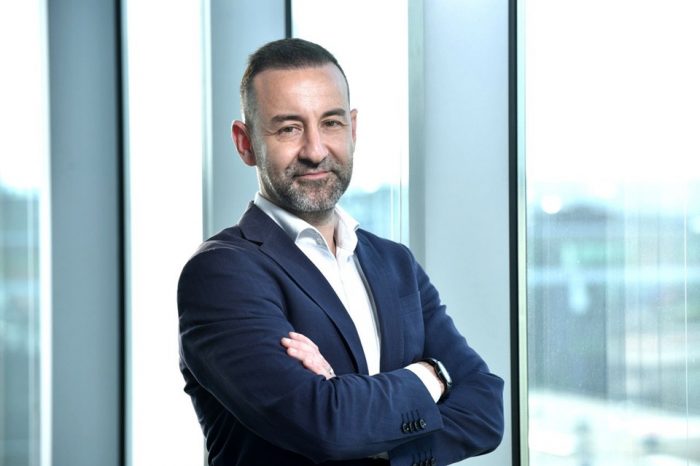
🎙️Călin Buciuta, CEO & Founder, Selectsoft: Today, customers expect solutions that can interpret data and provide clear guidance on what is happening and what actions should follow
 Magda Purice
Posted On April 8, 2026
Magda Purice
Posted On April 8, 2026

Outsourcing Today, the business services industry’s integrated networking and news platform, continues its interview series with leaders shaping the future of business services and related sectors. We explore key perspectives on the year ahead, strategic priorities, and growth opportunities.
Read below the key standpoints and perspectives of Călin Buciuta, CEO & Founder, Selectsoft
The impact of AI-based technologies
AI-based technologies are significantly strengthening our company’s competitive edge in 2026, primarily by boosting efficiency across our operations, especially within the software development department.
For our developers, working with AI today feels like having a set of “superpowers.” Tasks that once required extensive time, such as writing, reviewing, or optimizing code, can now be completed much faster and with greater accuracy. This allows our team to focus more on innovation, architecture, and delivering real value to our clients, rather than getting stuck in repetitive processes. Beyond development, AI plays a key role in how we analyze reports and data. It enables us to process large volumes of information quickly and extract meaningful insights, which directly support our strategic decision-making. As a result, we can respond faster to market changes and make more informed, data-driven decisions. Overall, AI is not just a tool for us, it’s becoming an essential part of how we operate, innovate, and stay competitive in an increasingly dynamic business environment.
In our company, no business decisions are AI-led. We don’t believe that core business decisions should be delegated to AI, at least not in our case. That said, we do use AI as a supporting tool when making decisions. It helps us structure data, analyze information, and extract insights on well-defined topics. However, the final decision always remains a human responsibility.
One of the biggest misconceptions about AI is that business leaders tend to fall into two extreme camps
On one side, there are entrepreneurs who underestimate AI because they don’t fully understand it. As a result, they assume it’s not relevant to their business or that it won’t bring real value. On the other side, there are those who overestimate it. They believe AI can be applied to almost every business process and, once implemented, it will run on its own and automatically generate a high ROI. The reality is somewhere in between.AI is a powerful tool, but it requires clear strategy, proper implementation, and ongoing human involvement to deliver meaningful results.
AI has fundamentally reshaped customers’ expectations when it comes to software. In the past, it was enough for systems to collect data and generate reports. Today, users expect much more: solutions that can interpret data and provide clear guidance on what is happening and what actions should follow. There is a clear shift from static reporting to proactive capabilities. Instead of simply showing past performance, systems are now expected to flag relevant situations in advance and suggest next steps – whether that means alerting users about potential stock shortages, highlighting unusual cost increases, or identifying customers who may be at risk of late payment. At the same time, interfaces need to be simple and intuitive, as interacting with software is becoming more like having a conversation, where users can quickly request insights or specific analyses without navigating complex processes. In short, customers expect software to move from passive tools to active, intelligent assistants.
Leveraging the competitive edge
Some of the ways we differentiate ourselves are part of our competitive advantage, so we prefer not to go into full detail. However, what I can share is that we continuously invest in staying ahead of the market. We actively explore and test new tools—both AI-driven and beyond—to understand how they can bring real value to our solutions. We also prioritize ongoing professional development, closely monitor market trends, and regularly analyze our competitive landscape. Most importantly, we stay very close to our customers. We actively seek their feedback and use it to refine and evolve our products and services. In the end, our differentiation comes from a combination of continuous learning, adaptability, and a strong customer-centric approach.
Balancing rapid innovation with responsible and ethical AI use is essential for us. We actively explore and integrate new AI capabilities, but only where they bring clear, practical value to our ERP solutions. We avoid using AI just for the sake of innovation. At the same time, we ensure human oversight, data responsibility, and transparency in everything we build. AI supports decisions, but critical business choices always remain human. In the end, for us, innovation only matters if it’s reliable, safe, and trusted by our customers.
Technology trends to grasp in 2026
Beyond AI, businesses need to focus more on data integration and interoperability, because the real challenge today is not collecting data, but making sure systems are connected and aligned. In many cases, data is still spread across multiple platforms, which makes it difficult to get a clear and consistent view of what is happening in the business. This often leads to delays, manual work, and decisions based on incomplete information. Technologies like APIs and cloud-native architectures make this easier, allowing systems to communicate and evolve without major constraints. At the same time, integration is not just a technical topic, but one that directly impacts how teams work and collaborate. When data flows properly, processes become simpler and decisions can be made faster and with more confidence. In the end, the real advantage does not come from having more tools, but from how well they work together in a connected and coherent ecosystem.