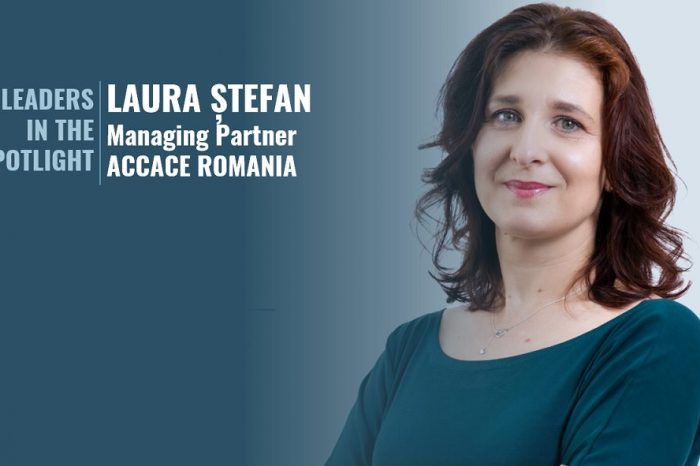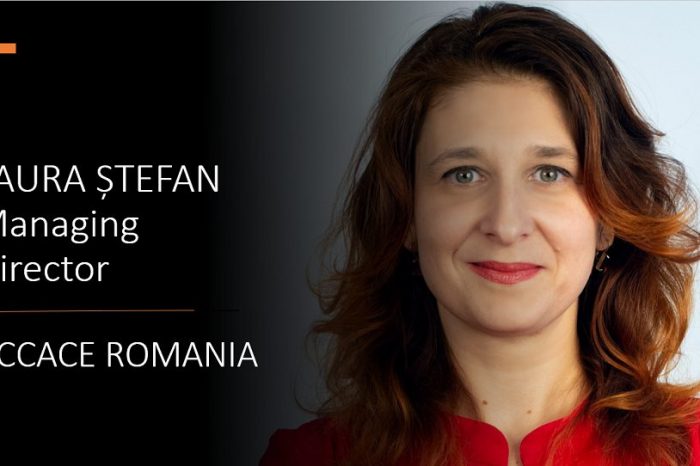
🎙️Laura Ștefan, Managing Partner Accace Romania: Our focus is not on adopting technology for its own sake, but on carefully assessing where AI can be implemented in a practical and responsible way
 Magda Purice
Posted On March 13, 2026
Magda Purice
Posted On March 13, 2026

Outsourcing Today, the business services industry’s integrated networking and news platform, continues its interview series with leaders shaping the future of business services and related sectors. We explore key perspectives on the year ahead, strategic priorities, and growth opportunities.
Read below the key standpoints and perspectives of Laura Ștefan, Managing Partner Accace Romania:
Laura Ștefan brings over 20 years of experience in professional services and has played a key role in developing Accace’s services for both new and established businesses in Romania. Beyond her executive role, she is also an active mentor in the AceON Accelerator program where she supports entrepreneurs with practical insights drawn from real business experience. Her expertise goes beyond numbers – focusing on how financial insight, strategy, and clear decision‑making help businesses grow sustainably and confidently.
Power words in 2026: efficiency, adaptability, trust
Build Smart. Scale Responsibly
AI has moved from experimentation to everyday operations, forcing business leaders to rethink how they build, scale, and stay accountable. For this edition’s “Build Smart. Scale Responsibly” theme, we invited Laura Ștefan, Managing Partner at Accace Romania, to share a grounded perspective on what AI is changing in 2026 and what still cannot be delegated to technology.
How is AI based technologies changing your company’s competitive edge in 2026?
AI‑based technologies are becoming increasingly relevant across the professional services industry, and for us they represent a clear opportunity to further improve both efficiency and service quality.
In areas such as accounting, payroll, and compliance, AI can support deeper automation of repetitive tasks, enhance data processing, and help identify anomalies or inconsistencies in large data sets. This allows our teams to spend less time on manual activities and more time on analytical and advisory work for clients.
Our focus is not on adopting technology for its own sake, but on carefully assessing where AI can be implemented in a practical and responsible way. We see AI as a complementary tool – one that supports our professionals rather than replaces them – strengthening accuracy, insight, and decision‑making over time.
What’s the biggest misconception business leaders still have about AI?
One of the biggest misconceptions I still encounter is the belief that AI is a ready‑made solution that can instantly transform a business. In reality, successful AI adoption requires clear use cases, high‑quality data, and well‑defined processes. Without these foundations, even the most advanced technologies struggle to deliver real value.
Another common misunderstanding is the idea that AI can fully replace human expertise and professional judgment. It cannot. AI can accelerate analysis, summarise information, and detect patterns – but it cannot carry accountability. The healthiest approach is to treat AI as a tool that amplifies strong processes and well‑trained teams, not as a shortcut around them.
Which business decisions in your company are AI led?
At this stage, most business decisions in our company are not directly AI‑led. As a professional services provider operating in accounting, payroll, tax, and compliance, decision‑making continues to rely primarily on the expertise and judgment of our specialists and management teams.
That said, at Accace, we are actively evaluating practical use cases where AI can add value without compromising reliability, data security, or regulatory compliance. In the medium term, we expect AI to play a stronger supporting role, particularly through enhanced data analysis and decision‑support capabilities, while strategic and client‑related decisions remain firmly guided by human expertise.
How has AI changed what customers expect from your products or services?
The growing visibility of AI across industries has gradually reshaped client expectations. Businesses increasingly look for faster implementation, greater transparency in reporting, and more data‑driven insights to support better decision‑making.
At the same time, especially in regulated and complex environments, clients continue to value human expertise. They rely on experienced professionals not only to process data, but to interpret it, provide guidance, and ensure full compliance with local regulations.
Ultimately, while AI enables more efficient service delivery, the real value for clients continues to come from the combination of advanced technology and professional advisory expertise.
How do you stay differentiated in your market, what tools and competitive advantages do you leverage in 2026?
In a highly competitive professional services market, differentiation increasingly comes from the ability to combine deep expertise, technology, and truly client‑focused service delivery.
At Accace Romania, one of our key strengths lies in the expertise of our teams across accounting, payroll, tax, and compliance, supported by a strong understanding of local regulatory environments. At the same time, being part of an international network allows us to deliver consistent service standards while maintaining strong local relevance.
We continue to invest in digital tools and process optimisation that improve efficiency and scalability, while ensuring reliability, compliance, and quality remain at the core of everything we do.
How do you balance rapid innovation with responsible and ethical AI use?
Balancing innovation with responsible AI use is essential, particularly in industries that handle sensitive financial and personal data. For us, this means ensuring that any AI‑related initiatives fully align with strict standards around data protection, compliance, and transparency.
As we explore potential use cases, we focus on areas where technology can improve operational efficiency while maintaining full control over data quality and security. In parallel, we closely monitor regulatory developments and best practices related to AI governance, data privacy, and ethical technology use.
What technology trend beyond AI should businesses be paying attention to now?
Beyond AI, one of the key technology trends businesses should pay close attention to is the broader digitalization and integration of business processes through cloud-based platforms and advanced data management.
Another important aspect is data governance and cybersecurity. As businesses become more digital and data-driven, protecting sensitive information and ensuring regulatory compliance is becoming just as important as adopting new technologies.
Overall, while AI receives much of the attention, the companies that will benefit the most in the coming years are those that build strong digital foundations – integrating systems, improving data quality, and creating secure, scalable infrastructures that support both operational efficiency and future innovation.
Looking Ahead
If I were to summarise 2026 in three words, they would be efficiency, adaptability, and trust.
Efficiency remains critical as organisations seek to optimise operations in an increasingly complex economic environment. Adaptability is equally important, as regulatory frameworks, technologies, and market conditions continue to evolve rapidly.
Above all, trust remains fundamental – particularly in professional services. Clients rely on their partners for reliability, compliance, and sound judgment, and maintaining that trust while managing technological change is essential for long‑term success.
Together, these three elements reflect how companies can move forward in 2026: improving efficiency, staying adaptable, and building lasting trust with clients and partners.
***
Accace Romania was founded in Bucharest in 2007, being one of the first international branches of Accace. Understanding the needs of our clients to have all internal processes managed under one umbrella, we have developed into a proactive consultancy and outsourcing partner who bridges the gap between needs and solutions, by combining smart and streamlined technology with an integrated approach. Today, we offer accounting, reporting, payroll, HR administration services, tax and corporate advisory and legal consultancy through an affiliated law firm. At international level, we are engaging over 800 specialists who have vast experience in handling small to large scale multi-country BPO projects for approximately 2,000 clients from various industries.